March 12, 2024 - Brampton - Courthouse
Cathy Kerr Reports:
Toivo reports:
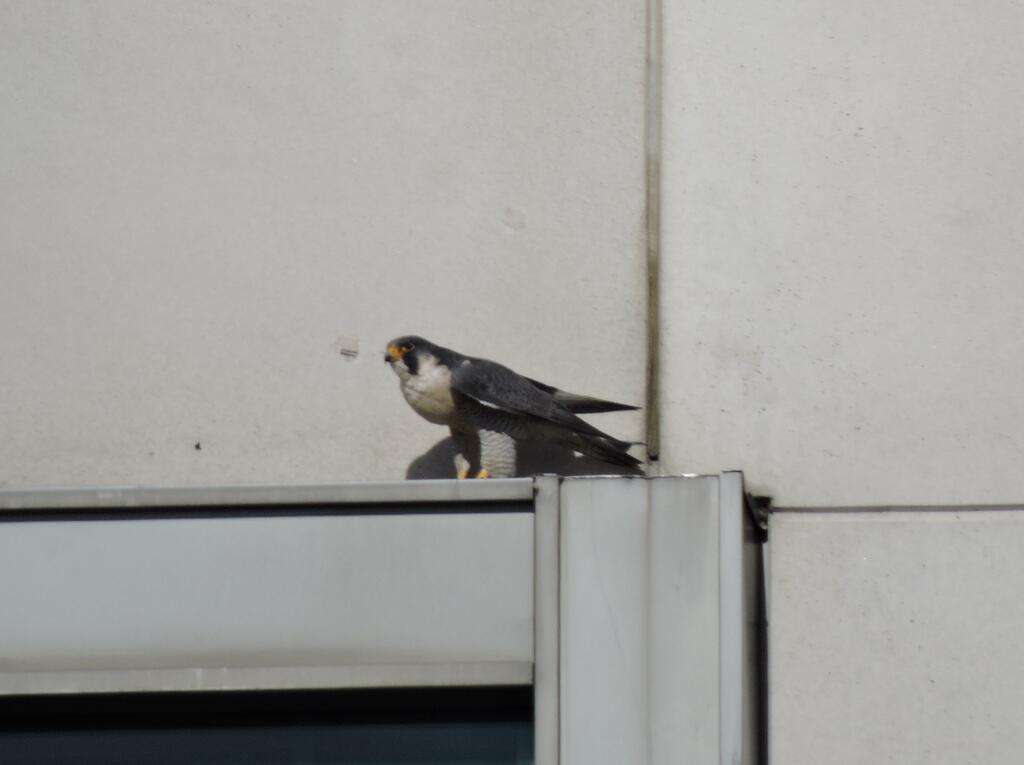
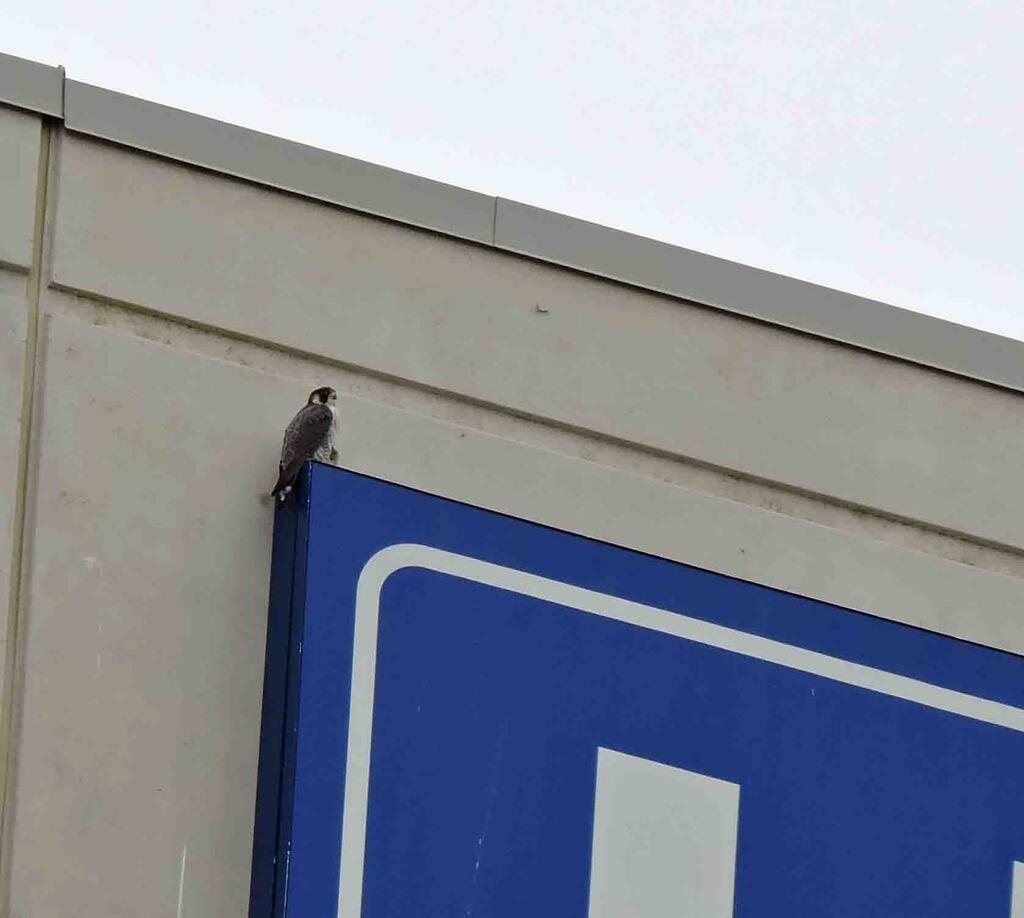
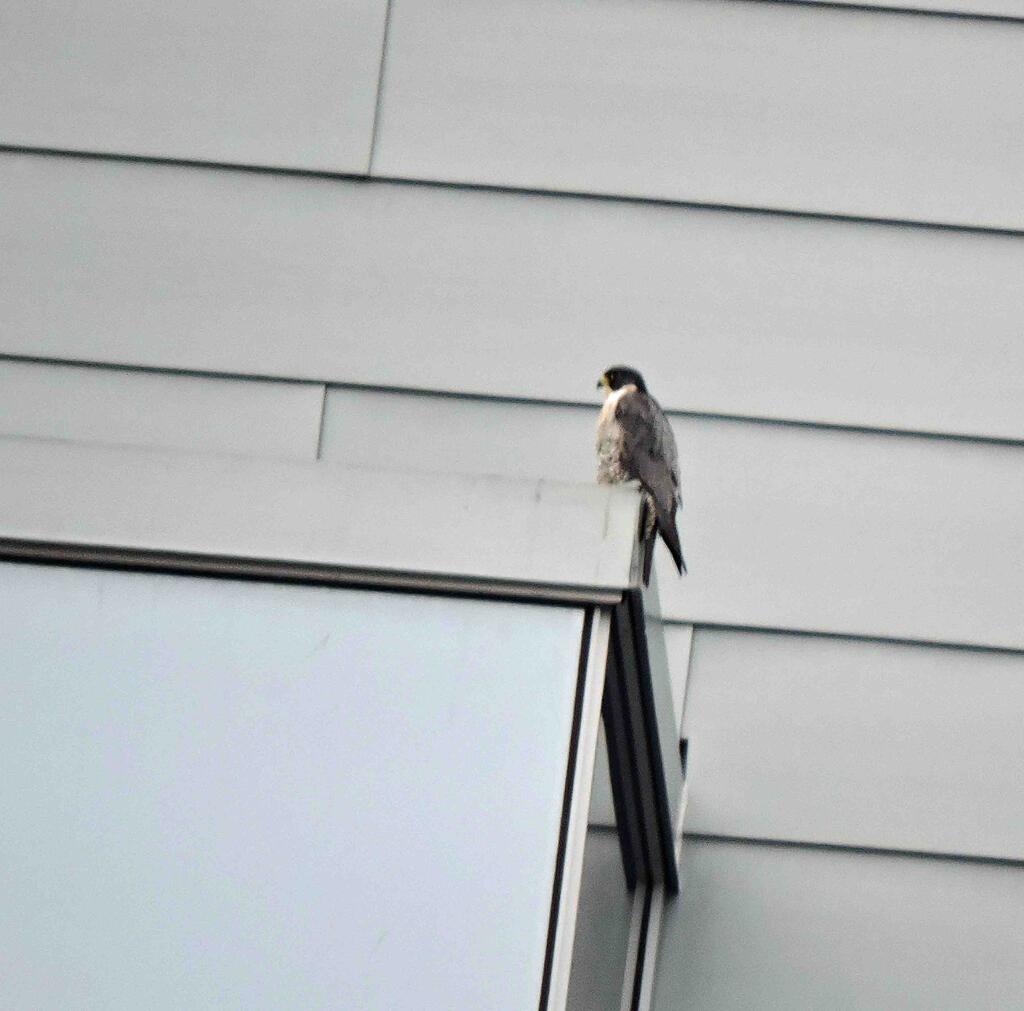
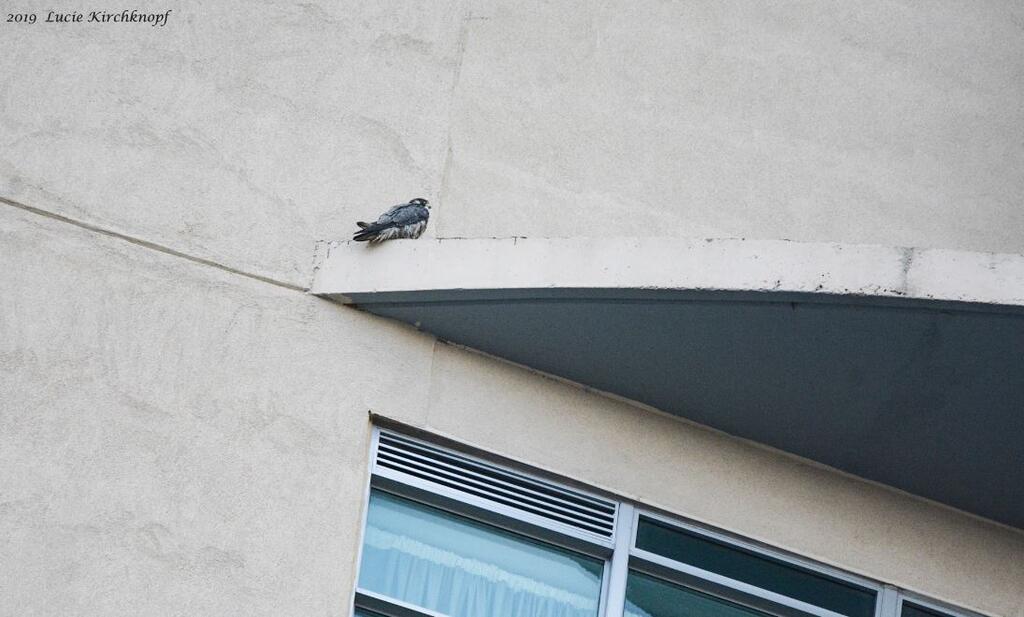
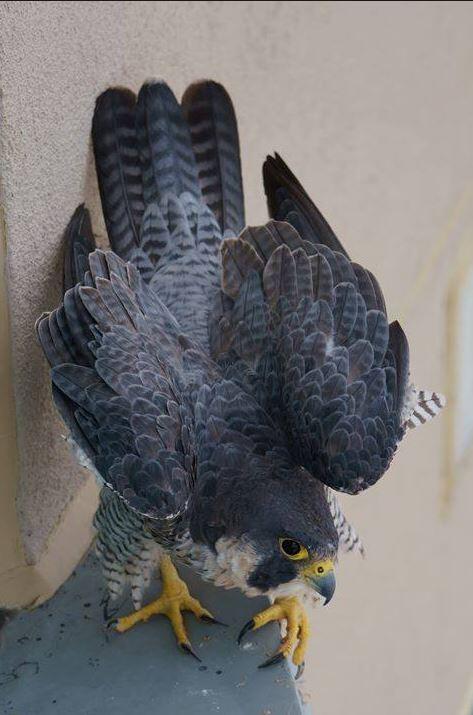
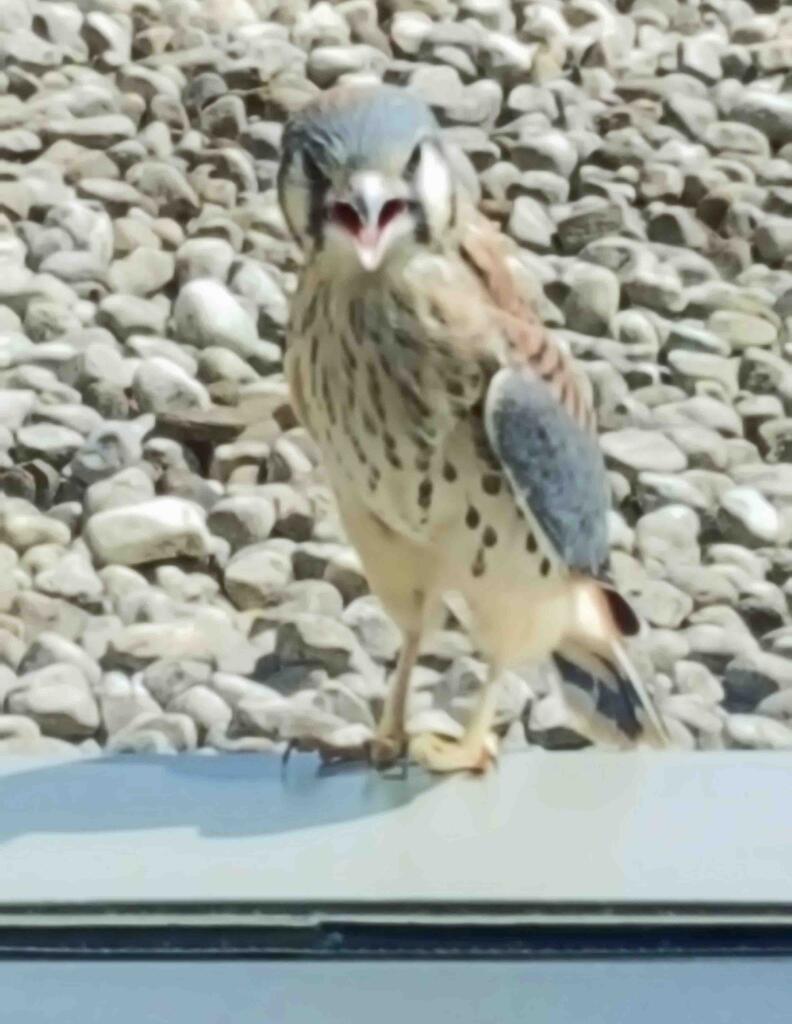
Since Tues 12th afternoon only one Falcon visible on the Courthouse, always within 50 feet of the corner where I now believe the female is down on eggs. This is the male moments before he went out on a short hunt. I will need to see an incubation exchange to be certain, but we have watched them both go out of sight before Tuesday. No band on the Male
Thanks Toivo!
Posted on March 15, 2024 8:19 pm
March 04, 2024 - Brampton - Courthouse
Cathy Kerr Reports:
TOIVO Asikainen Reports:
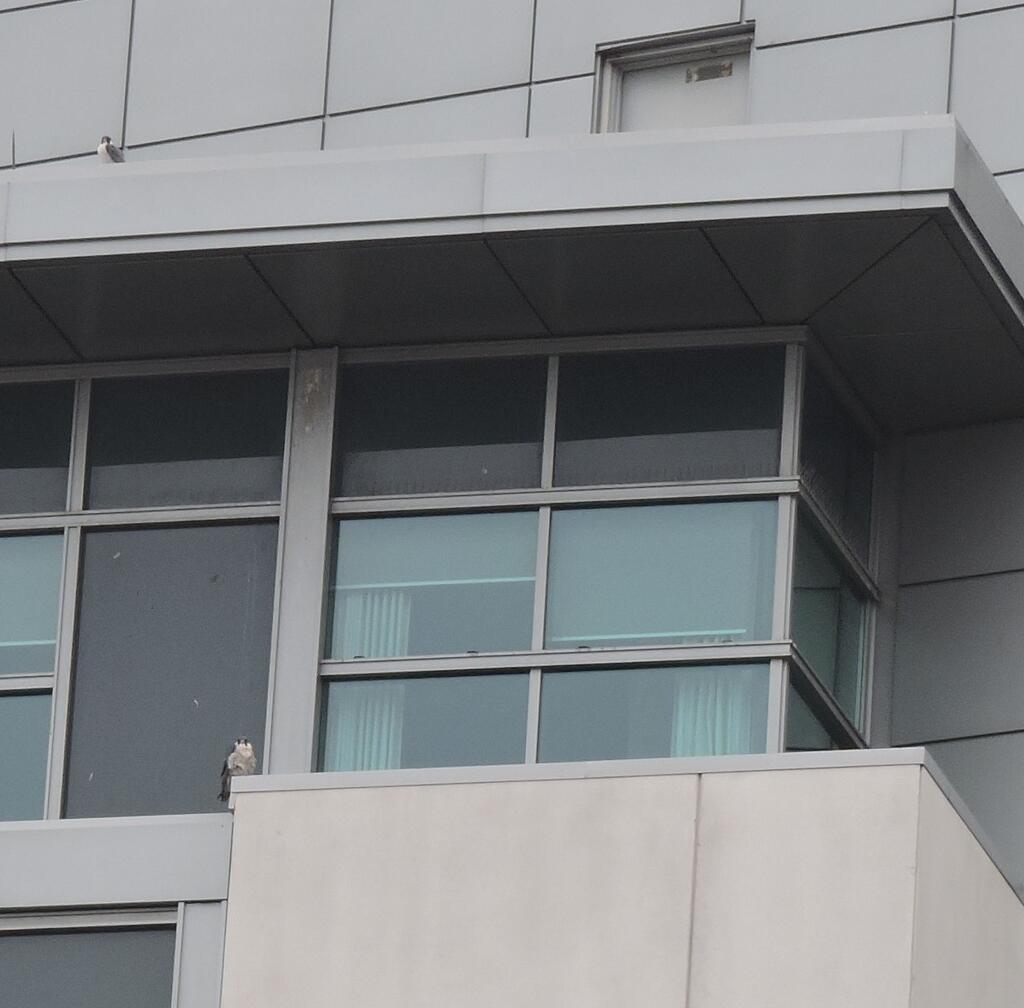
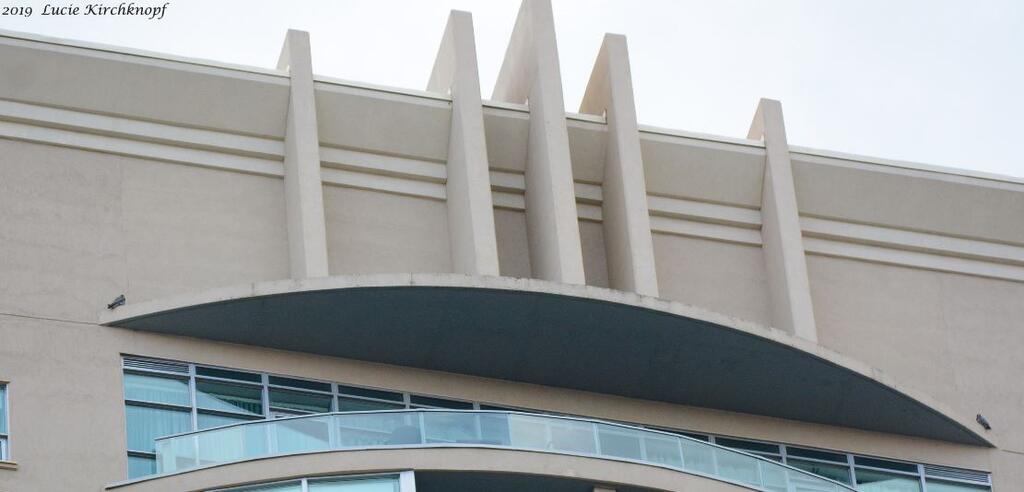
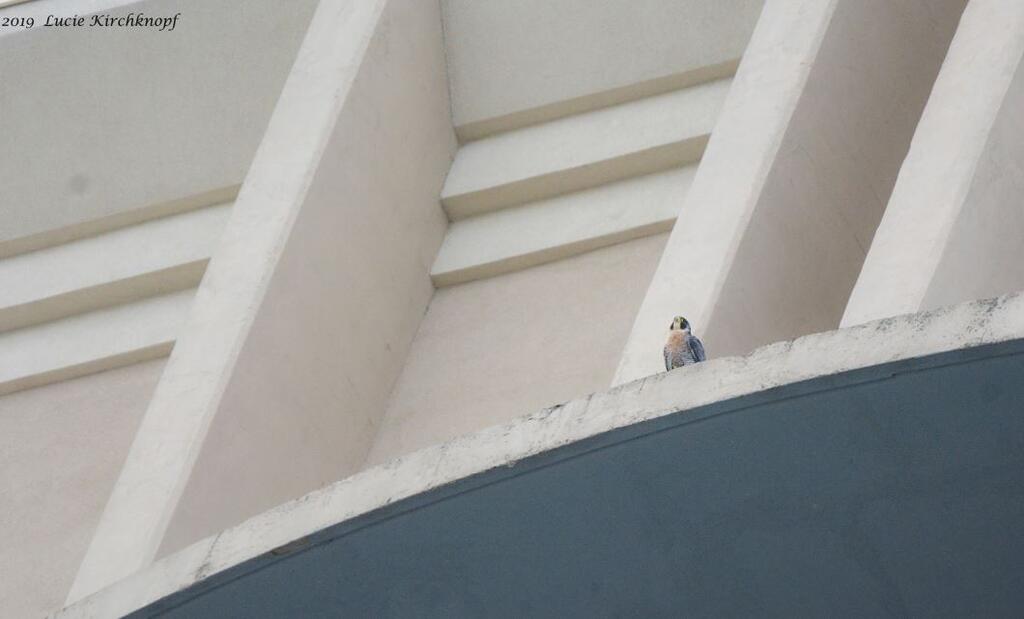
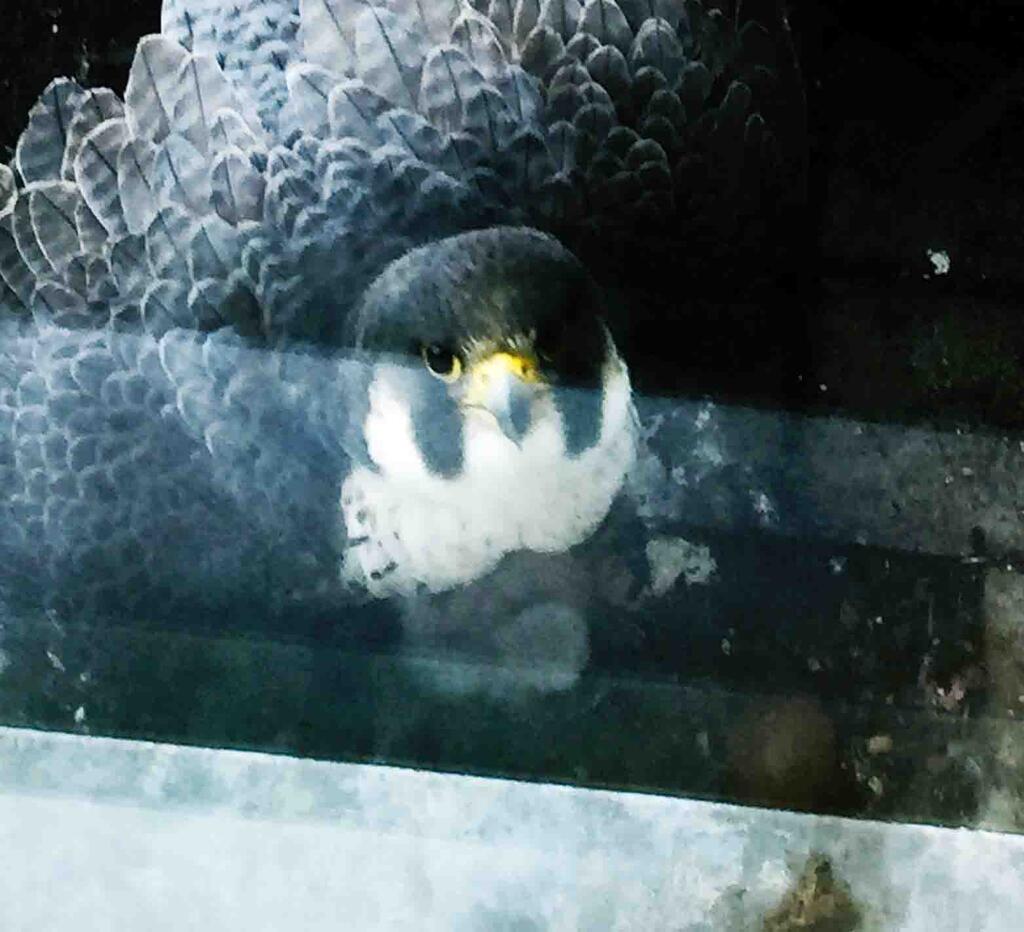
Brampton once again has a pair of Peregrines calling the Courthouse on Main st south of Steeles home. In this photo taken Sun ‘Mar 3rd Male on the upper ledge and Female the lower, the inside corner on the R side is the actual nest site where the last successful fledge Courtney hatched and, daughter to Milton and Truss in 2011. this ledge faces Main st and the Peel Region Police station
Posted on March 11, 2024 3:04 pm
March 23, 2020 - Brampton - Courthouse
Marion Nash Reports:
Hello
Sunday Brampton both Grins sitting in the sun .. BDC and about 100 yds away. nothing exciting.
HRH Kelle st only the Male visible … but agitated, active , moving around a lot. Left the Hospital Bldg going N .. the first TV I have seen was coasting up N over Keele st … did not attack it but escorted it further away and came right back. Interesting.
KPMG Concord no falcon visible on arrival … I decided to sit on it a bit , after 15 min or so the M came in with a kill and left it on the E corner of the ledge and kited about for a bit in the breeze then returned to the W corner and sat . 2 or 3 min then walked in a bit and stood with his back to me I could just see his head from the Walmart parking lot. Then he was out of sight … I saw a head at the E corner by the kill and drove over to get a look .. it was the F eating for a minute then she took off with the kill across the road to the lower PWC bldg. 150 feet away. I went back to the Walmart parking lot and watched …. now it gets good.
The M came out to the edge of the ledge and screamed at her … then flew a few times past her returned to the ledge and sat for a minute watching her .. then he walked back in out of sight.
Note Tracy would know this the ledge is about 8 to 10 ft wide and 24 to 30 in deep no overhang. North side of the bldg. About 10 stories up … 2 years ago I watched incubation exchanges twice … then 2 days of hard cold rain right onto the ledge .. not a good spot!
Pics are from the Walmart parking lot … #1 she has just finished and #2 he is staring at her!
Toivo
We could really use someone near HRH and KPMG to keep checking on these 2 sites
I hope posting it generates some interest ..
Toivo
Posted on March 23, 2020 2:57 pm
March 22, 2020 - Brampton - Courthouse
Marion Nash Reports:
Hello
Was really looking forward seeing everyone at the show …
On Thurs I did a site Run (first 3 Pics in order about 20 mins apart) DT Brampton , Humber River Hospital at Keele and 401, and KPMG at Jane and #7 (right beside the new Subway stop not store LOL)
I have been watching Peregrines at all 3 sites for years whenever I can. Last 2 pics are Sat at HRH Keele and 401 S side of a bldg 300 yards from the hospital .. M unbanded … quick meal on a small kill then gone but not up to Hospital bldg. Went N in a hurry like on a hunt! Sorry about photo quality but I got a good at both legs with bins.
KPMG only 1 bird all winter second Grin showed up 3 weeks back and 2 weeks ago activity started … close pair flying and sitting together on the ledge on the N side of the bldg. , then for 4 days every visit 1 PF on the ledge , M stands in back from edge you could just see the top of his head. F on the corner as in the pic. And on Sat NO falcon visible 2 visits. Was wondering if 4 days was protecting un incubated eggs and now down!!!
Observed 2 Falscons at DT Brampton and the Hospital but since late last week only seeing one at all 3 sites // Sadly both Brampton and KPMG .. they are not good nest sites as both keep failing !!
I hope you are all well and being careful …
With Respect
Toivo Asikainen
Posted on March 22, 2020 9:01 pm
August 17, 2019 - Brampton - Courthouse
Marion Nash Reports:
A few days ago I posted some photos from Nick Richardson of the peregrine couple that visit his window ledge. We have since identified the male as Typhoon (Y/17, 2015 hatch from Yonge/Eglinton) and the female as unbanded. Nick has named her ‘FALCO’ .. perfect ❤
Cathy Kerr and I took a trip to Brampton today to get familiar with the locations that have attracted these peregrines in the past. We could not see any birds at the court house and proceeded to downtown Brampton to hopefully find them at their other hang out. After perusing all the buildings in the area, we were thrilled to see someone fly to and land on a condo right near us! It was TYPHOON! Although we didn’t see his mate, we heard him eee-chupping (peregrine sweet talk) so he could see where she was, even if we couldn’t. Sure enough, our waiting paid off and FALCO appeared from the back of the ledge!
What a great day! We know where they are and hope for positive news next spring .. fingers crossed.
In the meantime, we are thankful that TYPHOON and FALCO are frequenting a ledge where they are welcomed! Our sincere thanks to Nick for embracing our couple and keeping us informed and with great photos! Cheers, Lucie
Posted on August 19, 2019 12:50 pm
September 05, 2018 - Brampton - Courthouse
Marion Nash Reports:
I know you have all missed keeping track of your local peregrine families but there is good news.
We now have someone to help with the web site and can post all the latest news.
Here is a quick summery of the 2018 nesting season, banding events and fledge watch. If you notice that I have not posted any information about the Bloor and Islington nest site it is because the nest failed this year. O’Connor the adult female has been replaced by a new female who although did lay eggs they did failed to hatch. We are not sure if O’Connor was killed by the new female in a territorial battle or if she has moved to an as of yet unknown location, hopefully the later is true.
Fledge Watch
although the fledge watchers were kept very busy by the fledglings and preformed many rescues we are happy to say that of the 41 chicks banded this season there were only 4 lost and 1 injured.
1 of the chicks lost produced at the Burlington Bridge nest was very sick with Trichominiasis a protozoan infection too advanced to save and who passed during extraction from nest.
The Second loss was Gigi from the Mississauga MEC nest site who unfortunately hit a window and died on impact.
The 3rd was Sun from the Toronto Downtown Sheraton Hotel nest who had gone missing for over a week and although our watchers made a tremendous effort to find him they began to expect by the end of the week that he passed. Unfortunately he was later found dehydrated and starving he was taken into rehab but passed same day.
I also got a report yesterday that one of the fledglings from 220 Duncan Mill Rd. Was found over the September long weekend in Hamilton with an injured wing. It turns out it is Loki identified by his band number X over 85. x-rays have been taken and shows a broken wrist so we are waiting on a report from the vet to see if this break is operable.
One other injury happened this year to the Adult male Lucifer in Kitchener at the CTV nest site and has been in rehab. Lucifer had a broken with that was operated on and he is now in flight pen to work the wing, His mate Mystery managed to keep her 4 chicks fed and protected but this is where the 4th loss comes in one of the chicks hopped off the nest box onto the tower where he spent a day or 2 and disappeared he was never found on the ground so we assume he was grabbed by and owl during the night. Hopefully all goes well for Lucifer and he will be released back to his mate soon.
Banding Events 2018
We are looking for funding to buy bands for next year as the Federal government is not longer supplying them to the Provinces and the Province of Ontario did not budget for them. If you are interested in supporting the banding program and help protect our Ontario produced falcon chicks please kindy make a donation to The Canadian Peregrine Foundation. You can send a cheque to the foundation at 25 Crouse Rd. Suite 20 Toronto, Ontario M1R 5P8 or go on line and click our donation button on the front page of the web site at www.peregrine-foundation.ca Canada Helps.
This year there were several unhatched eggs and most of the chicks hatched were male. The weights at banding age for most of the chicks was also low compared to pervious years.
May 22nd 2018
Mississauga MEC
Female-GIGI
band Z21
William Osler Hospital
Male-Indy
band X14
May 23rd 2018
Windsor Ambassador Bridge
Male-Hermes
band Y59
May 24th 2018
Hamilton Sheraton Hotel
Male-Lawrence
band
Y50
Male-Ainslie
band Y51
Male-Gage
band Y52
Male-Lisgar
band Y60
May 25th 2018
Oshawa Lakeridge Hospital
Female-Ripley
band Z22
Burlington Lift Bridge
Male-Cooper
band Y61
Male-Jackson
band X13
May 29th 2018
220 Duncan Mill Rd.
Male- Thor
band X83
Male-TT
band X84
Male- Loki
band X85
Male- Velcro
band X87
June 5th 2018
Canada Square
Male-Petrus
band X95
Male-Bart
band X97
Male-Ricklin
band R14
June 5th 2018
Rogers Centre
Female-Diamond
band Z23
Male-Grand Slam
Band Z24
Male-Homer
Band X94
June 5th 2018
Toronto Downtown Sheraton Hotel
Male- Geoff
Band X15
Male-Sheraton
Band X92
Male-Sun
Band X93
June 6th
OPG Pickering
Female- Millidarry
Band Z25
Female-Candu
Band Z26
Male- Chadwick
Band R15
Male-Cobalt
Band Z27
June 6th 2018
Scarborough Yellow Pages
Male-Alfa
Band R16
Female-Sierra
Band Z67
June 8th 2018
ADM Mills Port Colborne
Female- Mongolia
Band Z59
Male-Brandon
Band X03
Male- Macaroon
Band X07
female-Red Velvet
Band Z63
June 20th
Mount Sinai Hospital
Male-Chase ( banded when rescued during fledge)
Band X05
2 other chicks not banded ( believed to be male)
June 27th 2018
Don Mills Amazon
Male-Professor X
Band X04
Female- Chalaza
Band- Z38
June 28th 2018
Kitchener CATV Tower
Female-Eos
Band Z39
Female- Sadie
Band Z40
Male-Monarch
Band X12
Male-Mercury
Band W92
There were also 2 Quarry sites that produced chicks as did the Mississauga CRH Cement plant but due to bad logistics this year we were unable to get the age of the chicks in time to band. Hopefully we will get the information a bit quicker next year and if we are able to raise the funds needed to continue to band your chicks.
I will post some photos soon
Posted on September 5, 2018 5:04 pm
June 09, 2016 - Brampton - Courthouse
Mark Nash Reports:
June 9th - 2106
Sorry for the late posting as we have been very busy in the streets on the various fledge watches and at the banding tables again this year and as a result, there is lots of backlog posts that we’re all still trying to catch up on. Sadly, the long days in the streets are not giving us much time in the office, let alone time on the computers.
A big thank you to Nadine Peart who both called us and send in some of her photos fearing that the Brampton Courthouse peregrines had produced babies, as there were falcon fledglings being observed and lots of activity happening around the courthouse!
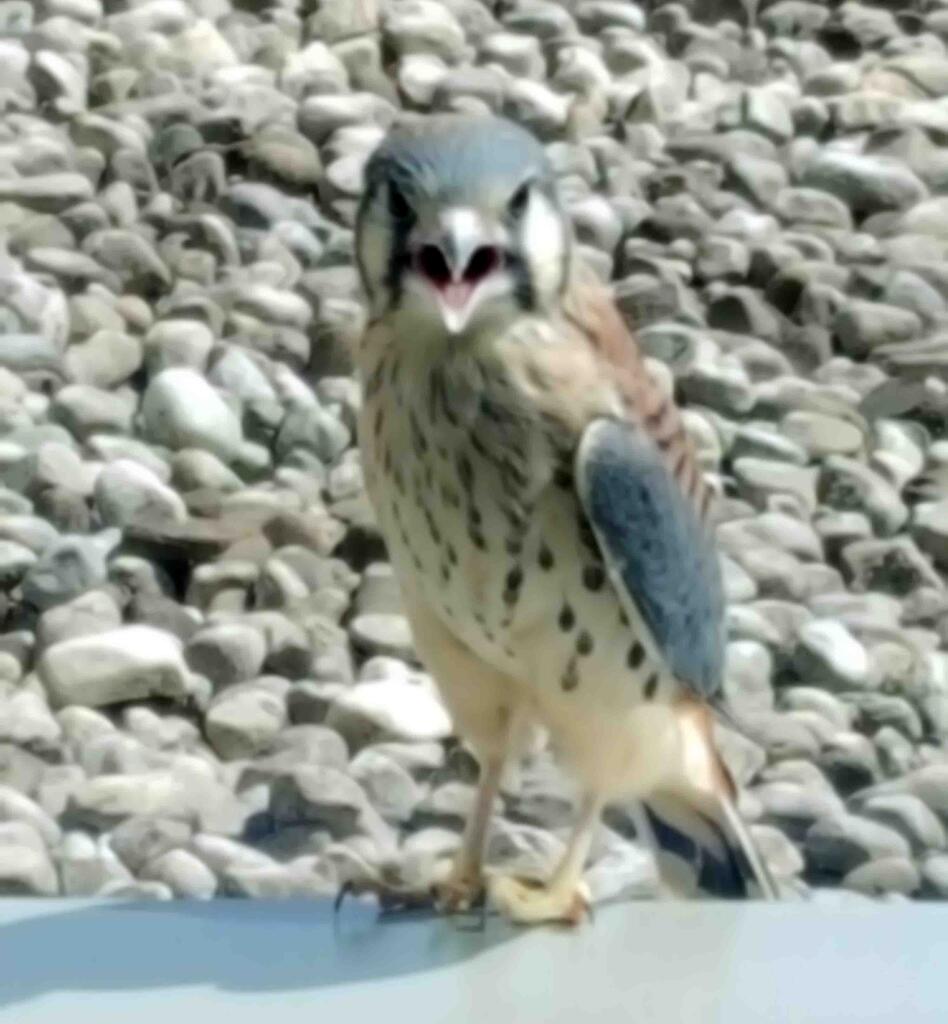
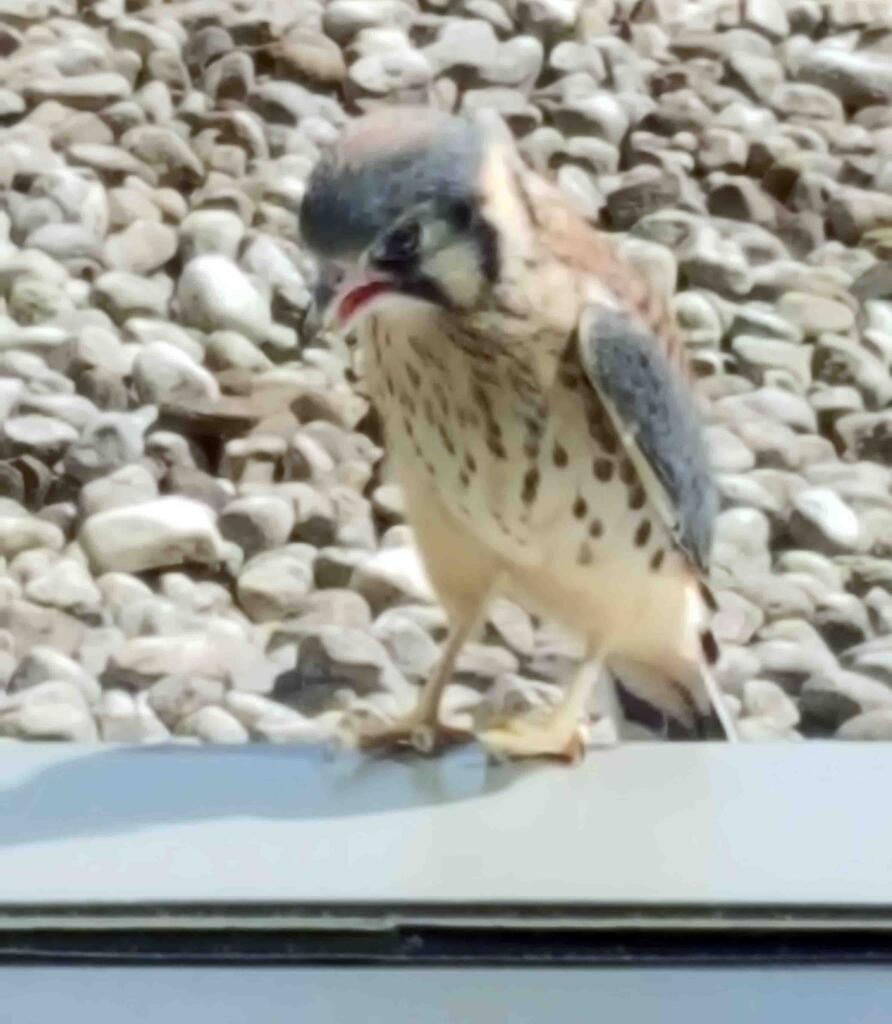
The bad news is of course is that the resident Brampton peregrines did not produce this season. The good news is that the local American Kestrels did produce fledglings, and there were American Kestrel fledglings terrorizing the courthouse staff! American Kestrels are true falcons,, (just not peregrine falcons).
With a noticeable decrease of American Kestrels around the province, it is nice to see that there is at least one family of Kestrels were very visible, and that they have in fact successfully produced offspring this spring!!
The dramatic decrease and absence of American Kestrels over the past few years both here in Ontario and many other parts of the continent is suspect in part to the ongoing poisoning of our environment with the use of Neonics
Scientific evidence is now pointing to Neonics for the decline of our global honey bee populations, in addition to many other species around the globe!
Neonics are systemic pesticides applied to the plants. Unlike these contact pesticides, which remain on the surface of the treated foliage, systemics are taken up by the plant and transported to all the tissues (leaves, flowers, roots and stems, as well as pollen and nectar). The actual seeds are treated!!! Neonicotinoids are a relatively new class of insecticides that share a common mode of action that affect the central nervous system of insects, resulting in paralysis and death. They include imidacloprid, acetamiprid, clothianidin, dinotefuran, nithiazine, thiacloprid and thiamethoxam.
Unfortunately, American Kestrels eat a large volume of insects, especially in the rural areas, and of course, the smaller birds that American Kestrels also eat, feed on both the insects that also feed on the plants!
Our honey bees have been dying off at alarming rates, all over the globe!!!, and neonicotinoid pesticides are being directly implicated in this global honey bee decline. Sadly, bees and birds aren’t the only victims as “Neonic” pesticides may also harm the human brain, nervous system and our hormonal systems.
The better news, as we are starting to realize, is that our urban nesting and resident raptors, (this includes the peregrines) are for the most parts protected from many of these nasty poisons, as they live their entire lives here in the cities where many of these poisons are not being used at all.
Most all of our resident territorial adult peregrines here in southern Ontario don’t actually migrate in the winter and many of these same resident adults can be seen wintering over and hanging around on the urban nest ledges.
Their food sources are also safe, as the very birds that they eat also live and feed here in the cities. Again, one of the reasons that it is believed that the “urban Kestrel populations” have remained somewhat more stable than their non-urban counterparts that feed from these poisoned toxic environments.
It is still mind blowing that most humans still remain delusional and in denial that the poisons that we spray and apply to our food sources and later consume won’t sooner or later have some very negative health affects on us. How much poison can we tolerate?
Posted on June 26, 2016 12:17 pm
June 11, 2015 - Brampton - Courthouse
Marion Nash Reports:
This report came in from Winston on June 8th and since then the adults have not been around much at all.
I got a message from Melanie at the CH with some strange observations this morning.
The female was on the ledge, not the nest area, and she was not being super aggressive as she usually likes greets us.
Striker is not on his usual perch, in fact nowhere to be found.
When I came to take a look, I saw a kestrel on one of the antennas which they stopped doing when the peregrines were present.
When I got to the window I found no adults, no chicks, no eggs and two owl pellets.
Posted on June 13, 2015 9:52 am
June 02, 2015 - Brampton - Courthouse
Marion Nash Reports:
We are able to confirm the first hatch there could be more than 1 chick but mom is not getting up to allow a look.
Congratulations Brampton and CBRE!
Posted on June 2, 2015 8:15 pm
May 27, 2015 - Brampton - Courthouse
Mark Nash Reports:
May 27th - 2015
Just a quickly update, with both Toivo and Grace reporting that although the waiting for something to happen is driving every one a little crazzzy, (watching peregrines incubate for over a month is kinda like watching paint dry),, both resident adults are still very active in their shift changes as they continue to incubate their eggs.
Based on their best guess, (based on when we believe that the pair started their full-time incubation), we are expecting a hatch by early to mid next week.
Marion reports that the property manager had another opportunity to take a closer look through the office suite window and they have confirmed that there are still four eggs and none have hatched as yet.
Given the odd unseasonal temps., going up and down like a yo-yo, many of the resident adult females have been sticking pretty tight to their eggs during the incubation , (and during the early stages of them brooding new hatchlings),, and as such, its been very difficult to see much of anything.
Toivo and Grace also report that the American Kestrels are back (also nesting) and they have been watching both families of falcons - (the Peregrines and Kestrels) involved in several intense territorial disputes! One moment the resident adult female Kestrel is seen both harassing, dive-bombing and chasing the resident adult Peregrine, than moments the tables are turned, and the peregrine is now stooping on and chasing the Kestrel!
Mother-hood full of hormones!! Its breeding season alright!
This has been going on for several weeks now!
With two sets of falcons in the same territory, (both nesting a hopefully producing offspring), one of the last places on this planet that you would want to be if you were a bird, is anywhere near this territory and these two falcon families!!
Stay tuned for additional news as it become available……….
Posted on May 29, 2015 12:03 am