May 28, 2022 - Mississauga - Holcim
Marion Nash Reports:
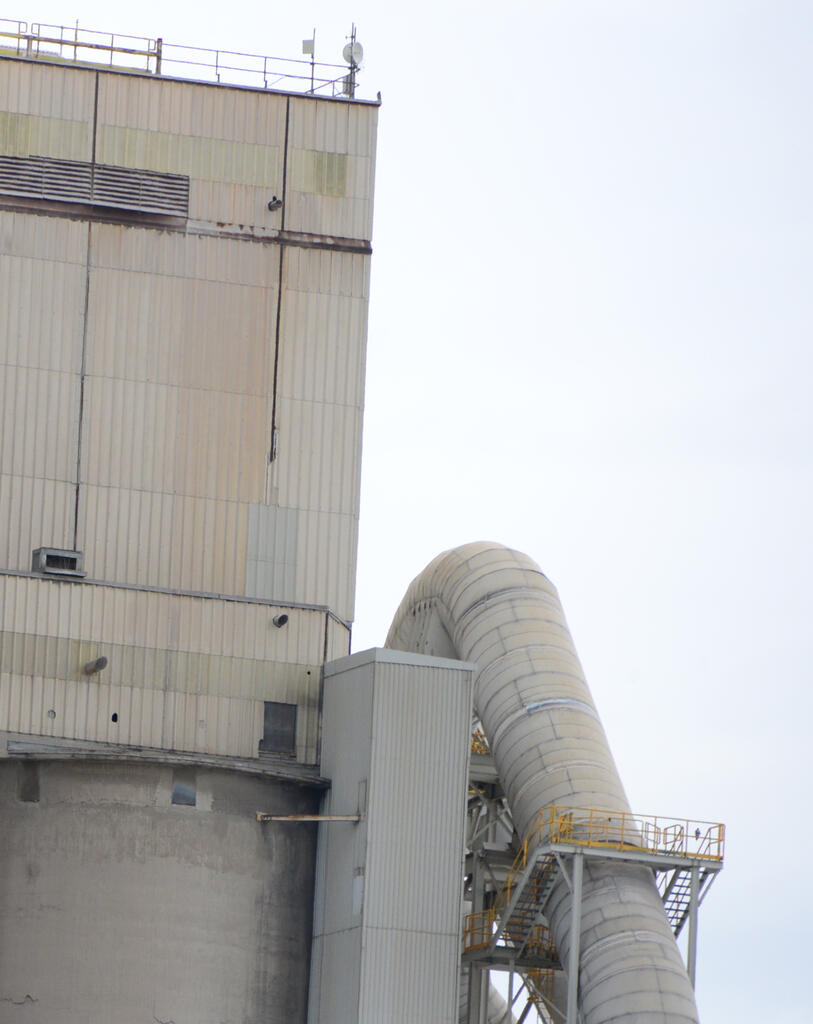
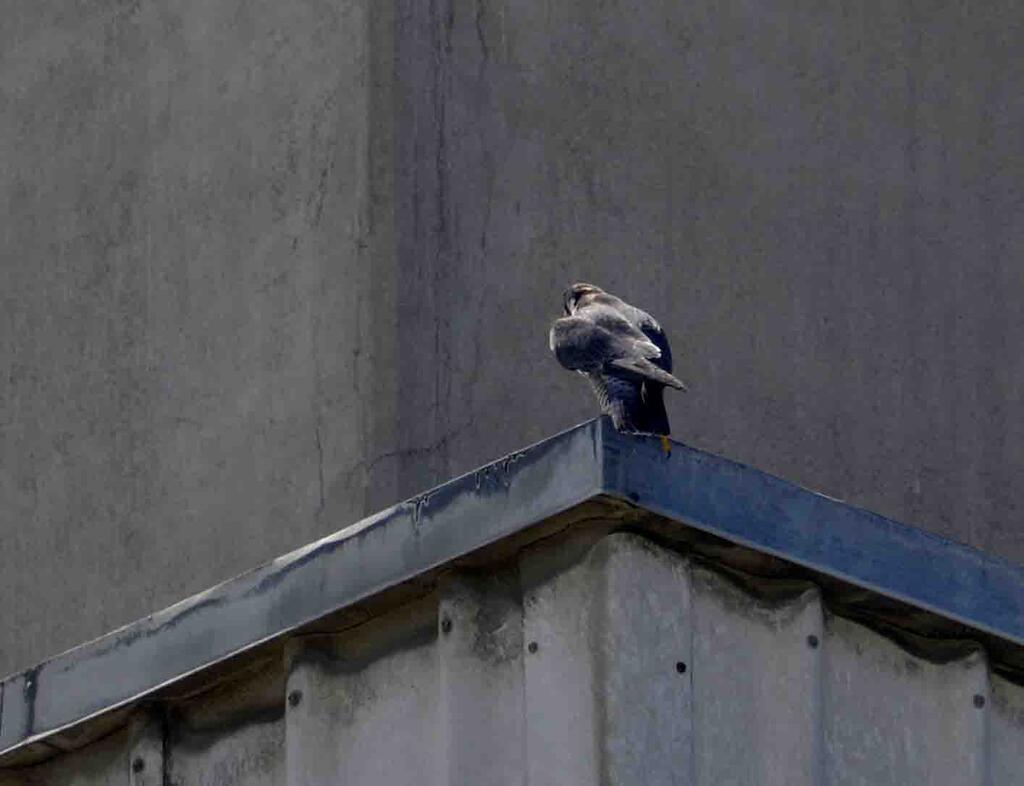
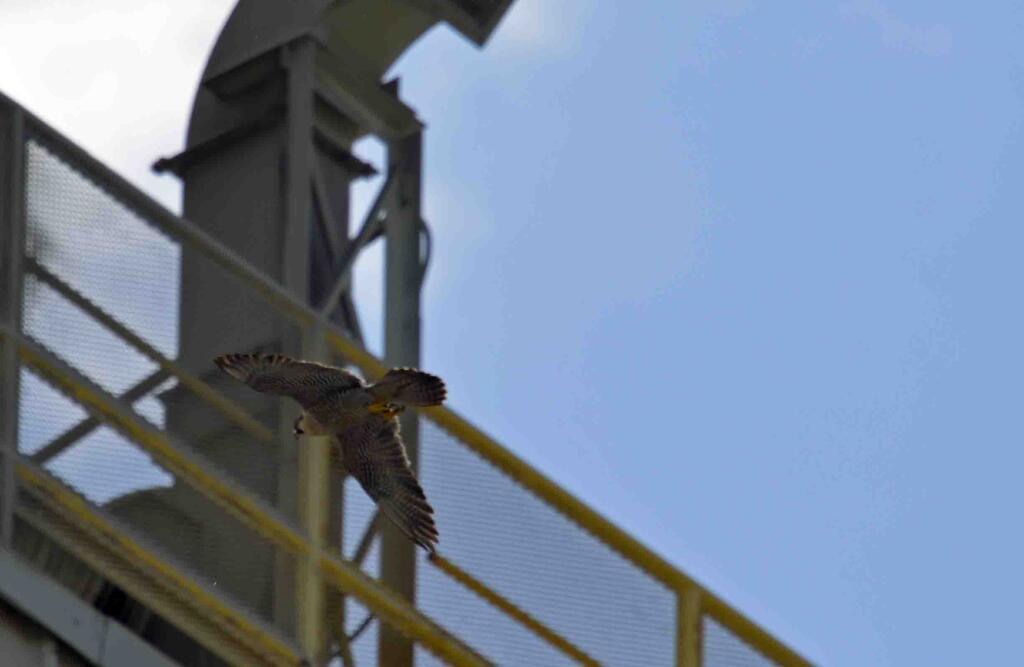
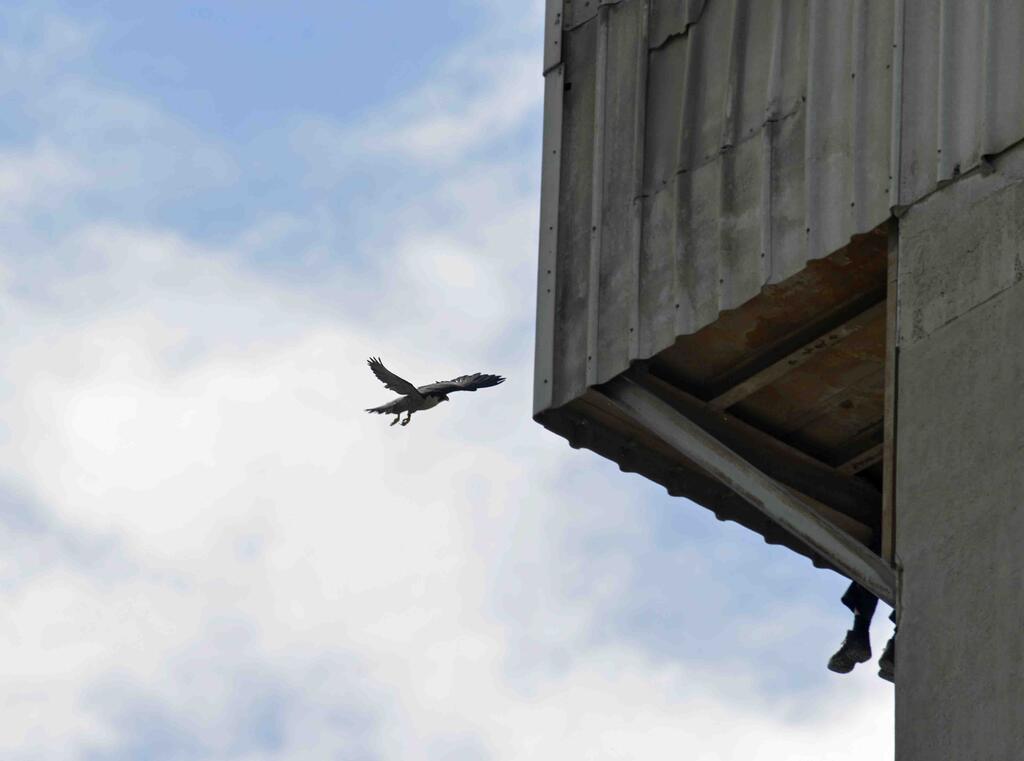
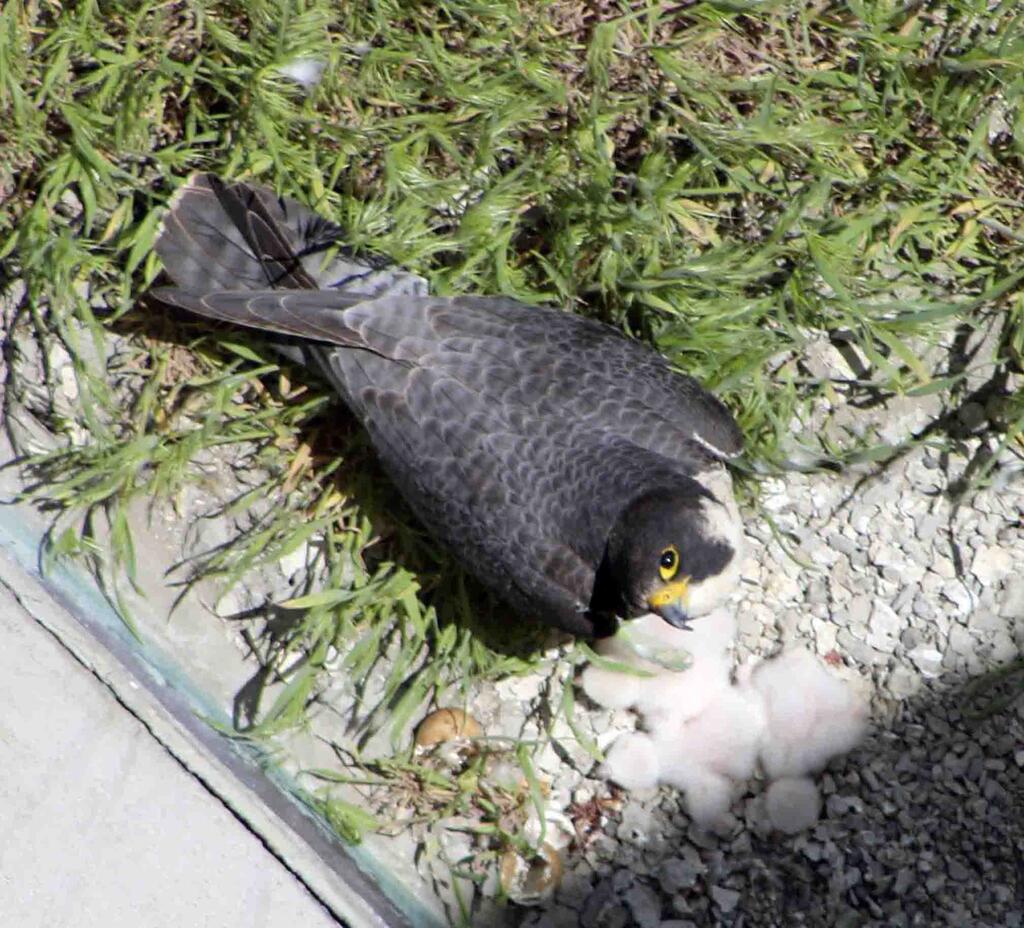
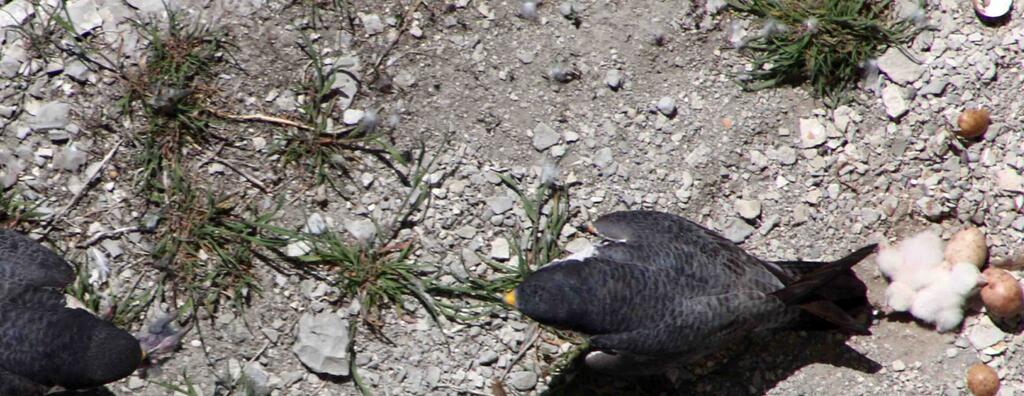
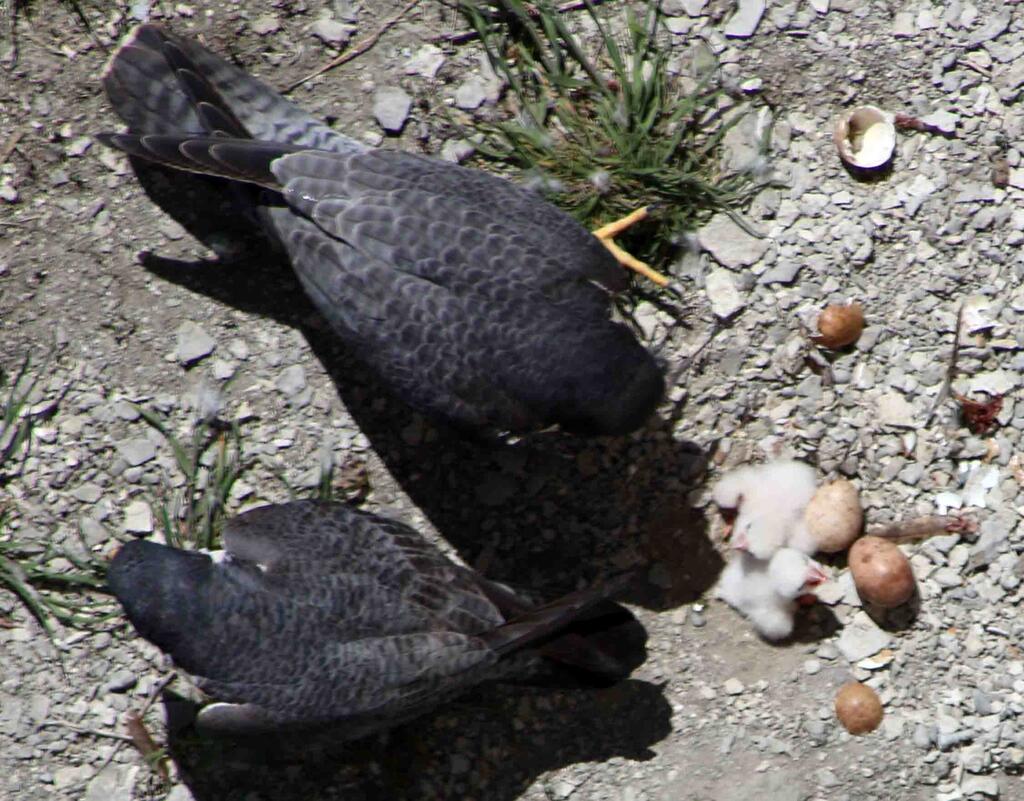
Mark and I stopped in to check on the Mississauga Cement plant nest and saw both adults on the plant. We did not see any feeding at the nest area so we are not sure if there is a hatch but they were both positioned where they could keep a watchful eye on the nest so there might be. See photos- One adult sitting under the communication dish the other at the yellow railing below.
Posted on May 28, 2022 4:32 pm
June 12, 2019 - Mississauga - Holcim
Marion Nash Reports:
Although we were not able to access the nest for banding this year due to safety issues there is good news and an update from Mississauga CRH.
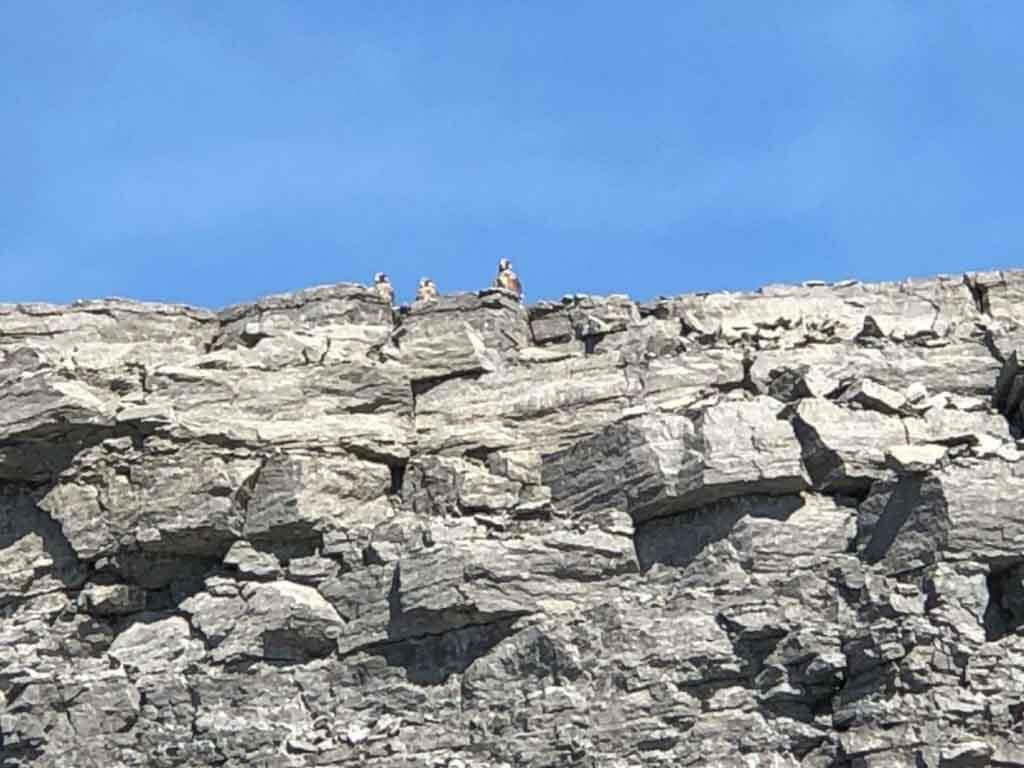
Just a quick update on the peregrine chicks at Mississauga and Ogden Point Quarry. Both sites have 3 chicks. The 3 chicks at the quarry have fledged (see attached photo). The 3 chicks at the Mississauga are flapping their wings at the nest box, but haven’t yet left the roof, but we expect they will any time now.
Posted on June 12, 2019 12:05 pm
April 01, 2019 - Mississauga - Holcim
Marion Nash Reports:
April 1st/2019
As per the norm it would seem for this Mississauga Lakeshore nest site,, we have received an update this morning from the CRH folks that their peregrines are very visible around the nest site,, with very visible squabbling and fighting going on with territorial disputes with another peregrine over claim on the territory!
You know what they say,, location, location, location,, and this seems to have been the norm at this nest site over the years with constant squabbling at this time of year between the resident pair and other peregrines wanting the territory for their own!!
Historically, this is actually the norn at most of these lake-side nest sites with many of the existing peregrines fighting each other for these prime nesting spots!
As the migrating peregrines return back to southern Ontario from their wintering-over grounds in the far south, as they fly along the migration fly-ways, the pressure is on to quickly get back on an availability territory,,,, scope it out,,,, hold and defend it,,,,, attract a mate and then once again,, HOLD and DEFEND it from all others,,,, all wanting to do the same thing… in your territory!
Given the limited number of “suitable nesting locations” here in southern Ontario on the lakeside borders,,, there is always a high demand and competition….. and you’ve got to be prepared to defend it!!
And they do,, sometimes to the death!!
Stay tuned,, let’s hope that this disruption won’t affect the courtship routines too much and a final outcome is sooner than later, so the pair (who ever they are) gets back to family matters……
Posted on April 1, 2019 3:39 pm
September 05, 2018 - Mississauga - Holcim
Marion Nash Reports:
I know you have all missed keeping track of your local peregrine families but there is good news.
We now have someone to help with the web site and can post all the latest news.
Here is a quick summery of the 2018 nesting season, banding events and fledge watch. If you notice that I have not posted any information about the Bloor and Islington nest site it is because the nest failed this year. O’Connor the adult female has been replaced by a new female who although did lay eggs they did failed to hatch. We are not sure if O’Connor was killed by the new female in a territorial battle or if she has moved to an as of yet unknown location, hopefully the later is true.
Fledge Watch
although the fledge watchers were kept very busy by the fledglings and preformed many rescues we are happy to say that of the 41 chicks banded this season there were only 4 lost and 1 injured.
1 of the chicks lost produced at the Burlington Bridge nest was very sick with Trichominiasis a protozoan infection too advanced to save and who passed during extraction from nest.
The Second loss was Gigi from the Mississauga MEC nest site who unfortunately hit a window and died on impact.
The 3rd was Sun from the Toronto Downtown Sheraton Hotel nest who had gone missing for over a week and although our watchers made a tremendous effort to find him they began to expect by the end of the week that he passed. Unfortunately he was later found dehydrated and starving he was taken into rehab but passed same day.
I also got a report yesterday that one of the fledglings from 220 Duncan Mill Rd. Was found over the September long weekend in Hamilton with an injured wing. It turns out it is Loki identified by his band number X over 85. x-rays have been taken and shows a broken wrist so we are waiting on a report from the vet to see if this break is operable.
One other injury happened this year to the Adult male Lucifer in Kitchener at the CTV nest site and has been in rehab. Lucifer had a broken with that was operated on and he is now in flight pen to work the wing, His mate Mystery managed to keep her 4 chicks fed and protected but this is where the 4th loss comes in one of the chicks hopped off the nest box onto the tower where he spent a day or 2 and disappeared he was never found on the ground so we assume he was grabbed by and owl during the night. Hopefully all goes well for Lucifer and he will be released back to his mate soon.
Banding Events 2018
We are looking for funding to buy bands for next year as the Federal government is not longer supplying them to the Provinces and the Province of Ontario did not budget for them. If you are interested in supporting the banding program and help protect our Ontario produced falcon chicks please kindy make a donation to The Canadian Peregrine Foundation. You can send a cheque to the foundation at 25 Crouse Rd. Suite 20 Toronto, Ontario M1R 5P8 or go on line and click our donation button on the front page of the web site at www.peregrine-foundation.ca Canada Helps.
This year there were several unhatched eggs and most of the chicks hatched were male. The weights at banding age for most of the chicks was also low compared to pervious years.
May 22nd 2018
Mississauga MEC
Female-GIGI
band Z21
William Osler Hospital
Male-Indy
band X14
May 23rd 2018
Windsor Ambassador Bridge
Male-Hermes
band Y59
May 24th 2018
Hamilton Sheraton Hotel
Male-Lawrence
band
Y50
Male-Ainslie
band Y51
Male-Gage
band Y52
Male-Lisgar
band Y60
May 25th 2018
Oshawa Lakeridge Hospital
Female-Ripley
band Z22
Burlington Lift Bridge
Male-Cooper
band Y61
Male-Jackson
band X13
May 29th 2018
220 Duncan Mill Rd.
Male- Thor
band X83
Male-TT
band X84
Male- Loki
band X85
Male- Velcro
band X87
June 5th 2018
Canada Square
Male-Petrus
band X95
Male-Bart
band X97
Male-Ricklin
band R14
June 5th 2018
Rogers Centre
Female-Diamond
band Z23
Male-Grand Slam
Band Z24
Male-Homer
Band X94
June 5th 2018
Toronto Downtown Sheraton Hotel
Male- Geoff
Band X15
Male-Sheraton
Band X92
Male-Sun
Band X93
June 6th
OPG Pickering
Female- Millidarry
Band Z25
Female-Candu
Band Z26
Male- Chadwick
Band R15
Male-Cobalt
Band Z27
June 6th 2018
Scarborough Yellow Pages
Male-Alfa
Band R16
Female-Sierra
Band Z67
June 8th 2018
ADM Mills Port Colborne
Female- Mongolia
Band Z59
Male-Brandon
Band X03
Male- Macaroon
Band X07
female-Red Velvet
Band Z63
June 20th
Mount Sinai Hospital
Male-Chase ( banded when rescued during fledge)
Band X05
2 other chicks not banded ( believed to be male)
June 27th 2018
Don Mills Amazon
Male-Professor X
Band X04
Female- Chalaza
Band- Z38
June 28th 2018
Kitchener CATV Tower
Female-Eos
Band Z39
Female- Sadie
Band Z40
Male-Monarch
Band X12
Male-Mercury
Band W92
There were also 2 Quarry sites that produced chicks as did the Mississauga CRH Cement plant but due to bad logistics this year we were unable to get the age of the chicks in time to band. Hopefully we will get the information a bit quicker next year and if we are able to raise the funds needed to continue to band your chicks.
I will post some photos soon
Posted on September 5, 2018 4:55 pm
June 12, 2017 - Mississauga - Holcim
Marion Nash Reports:
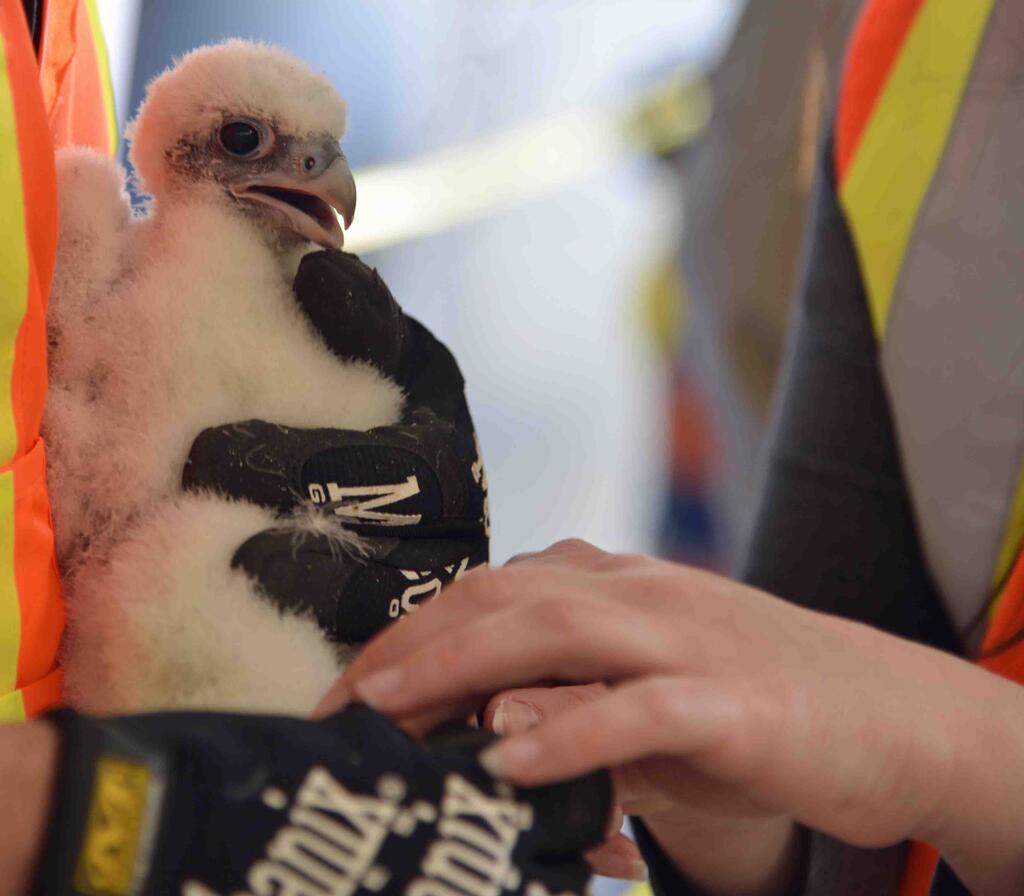
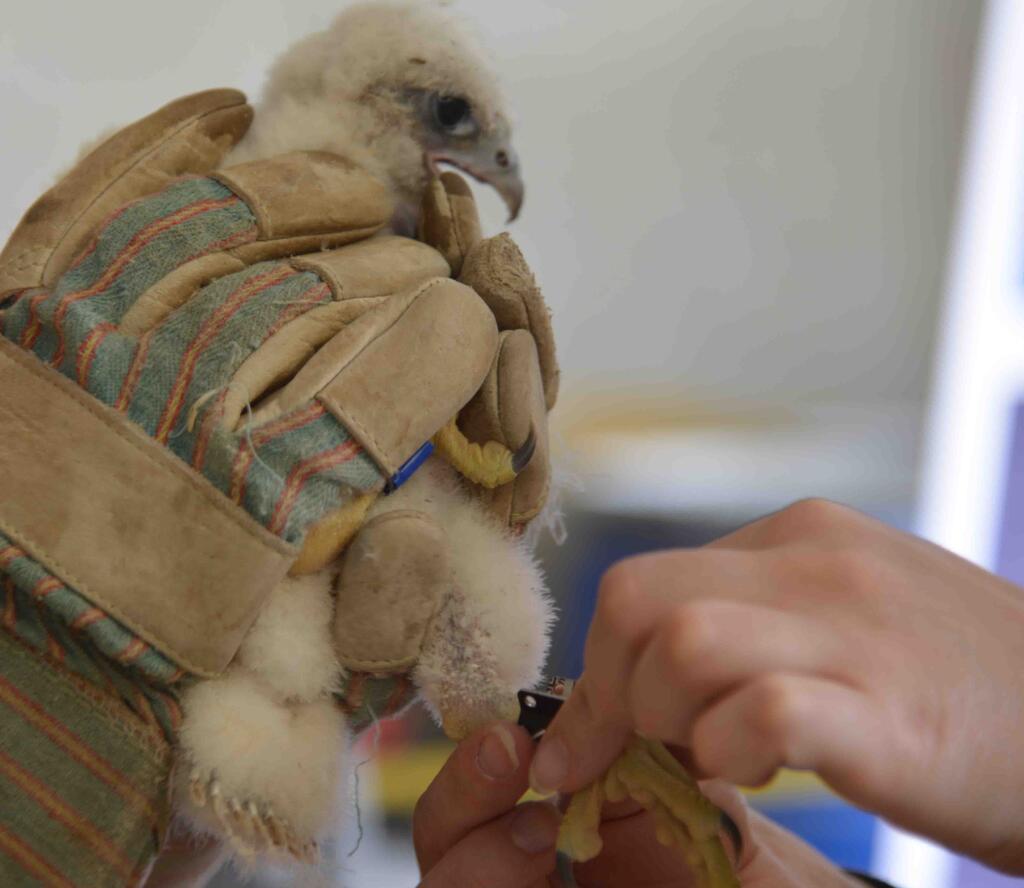
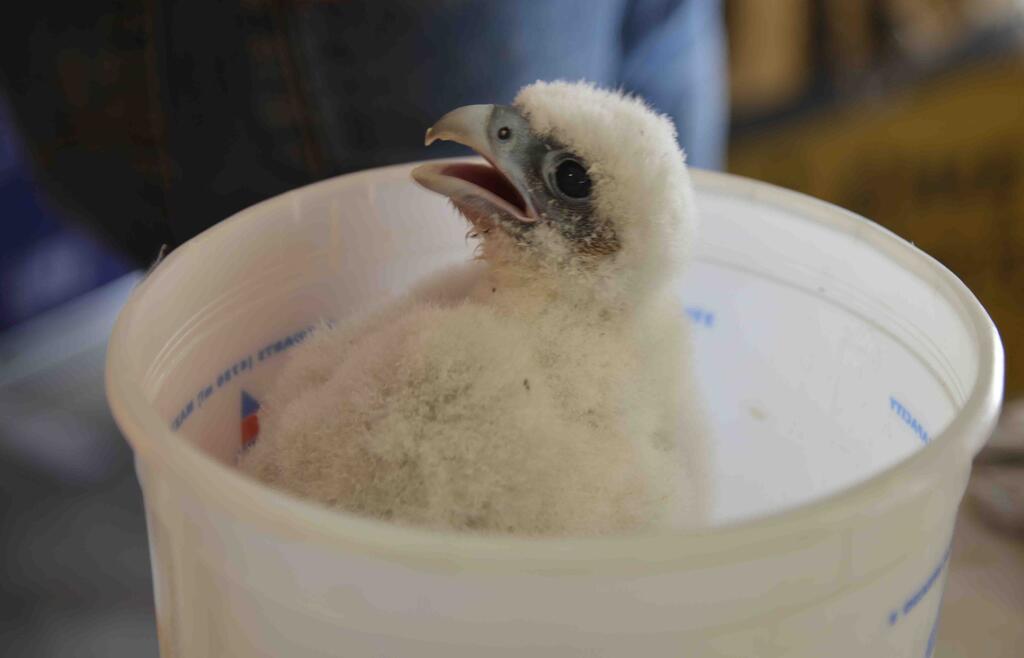
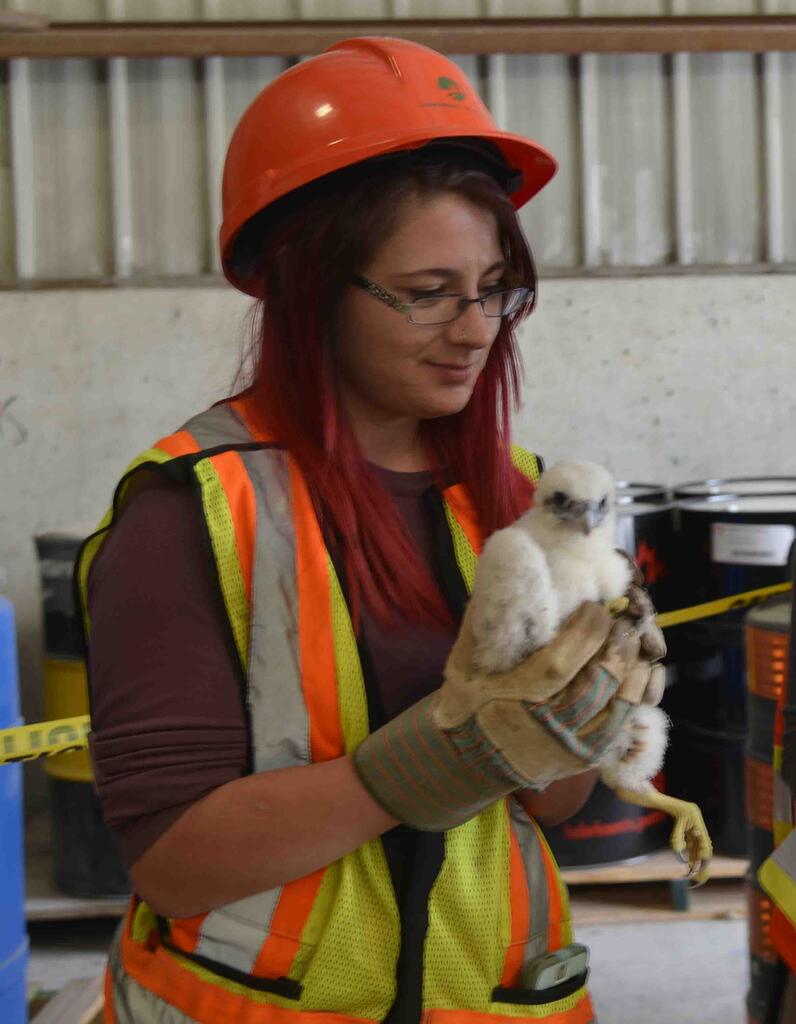
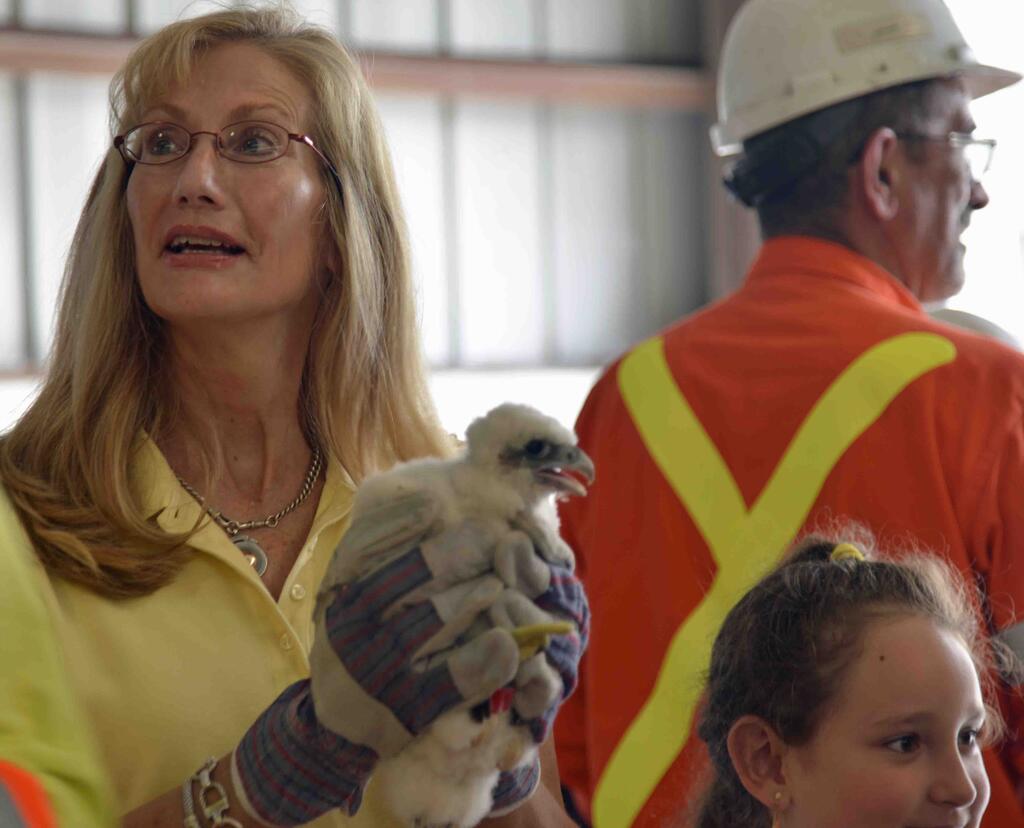
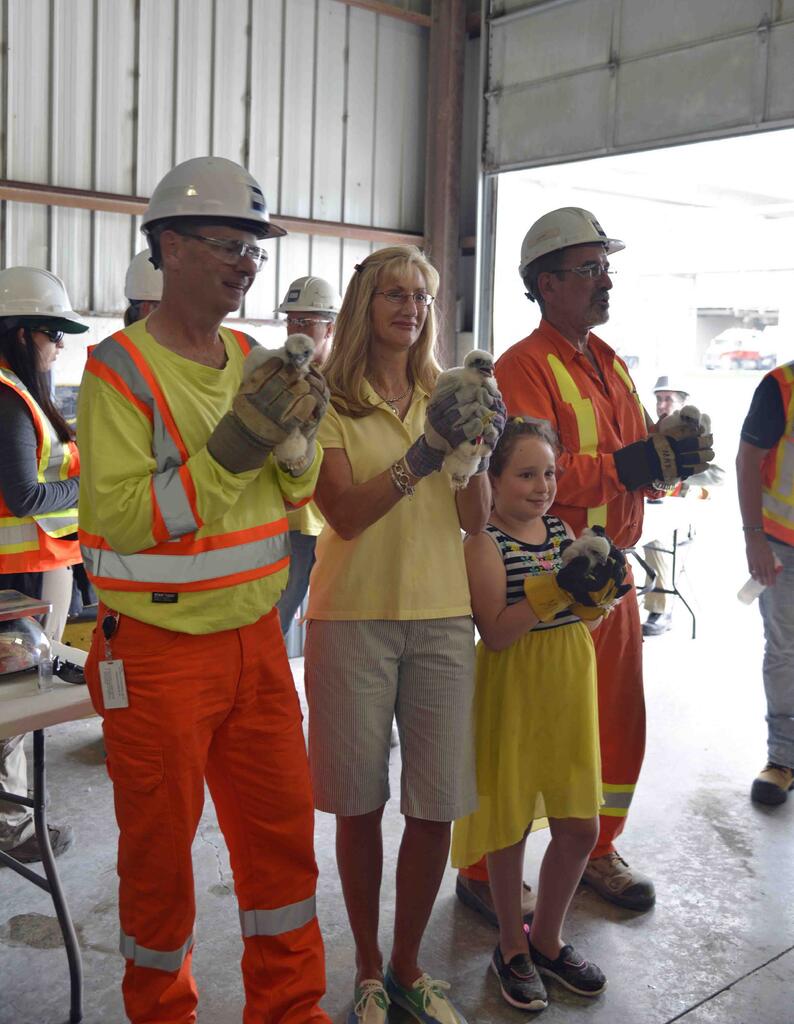
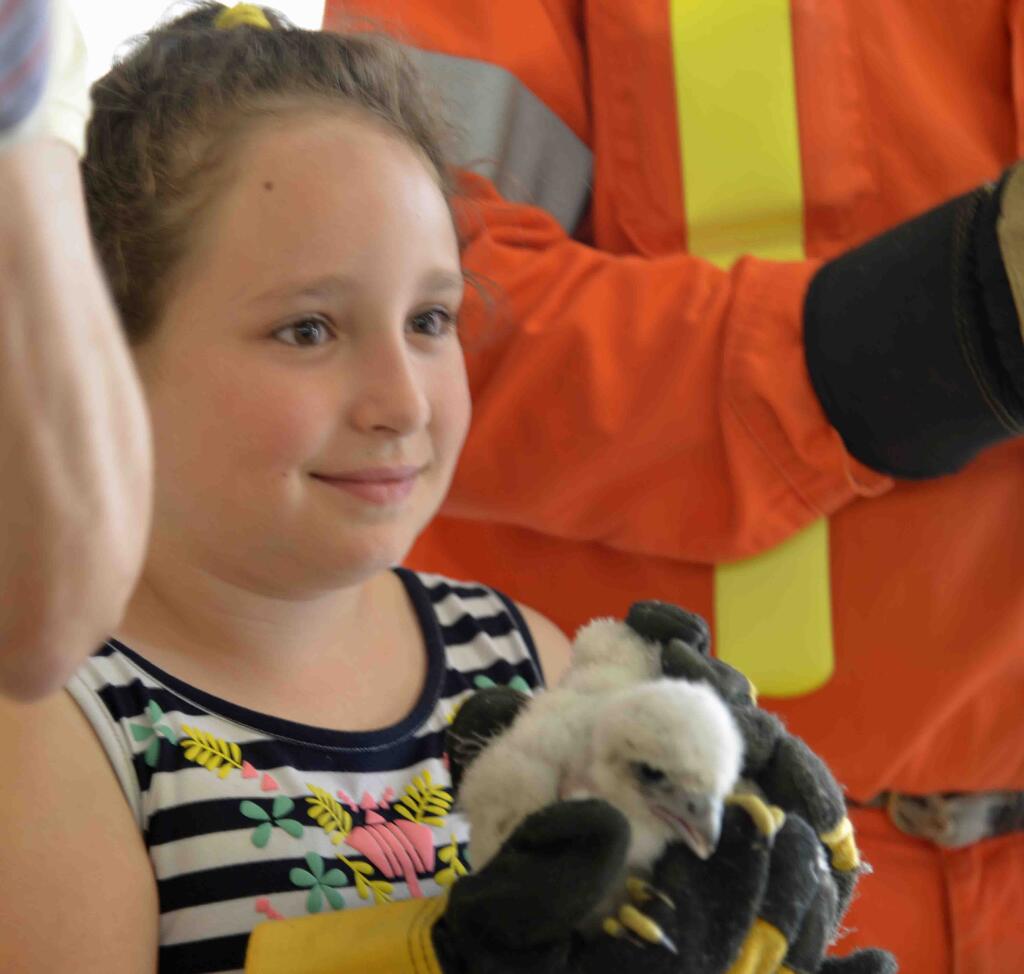
A few photos from banding day 2017
Posted on June 12, 2017 12:49 am
June 09, 2017 - Mississauga - Holcim
Marion Nash Reports:
June 9th 2017
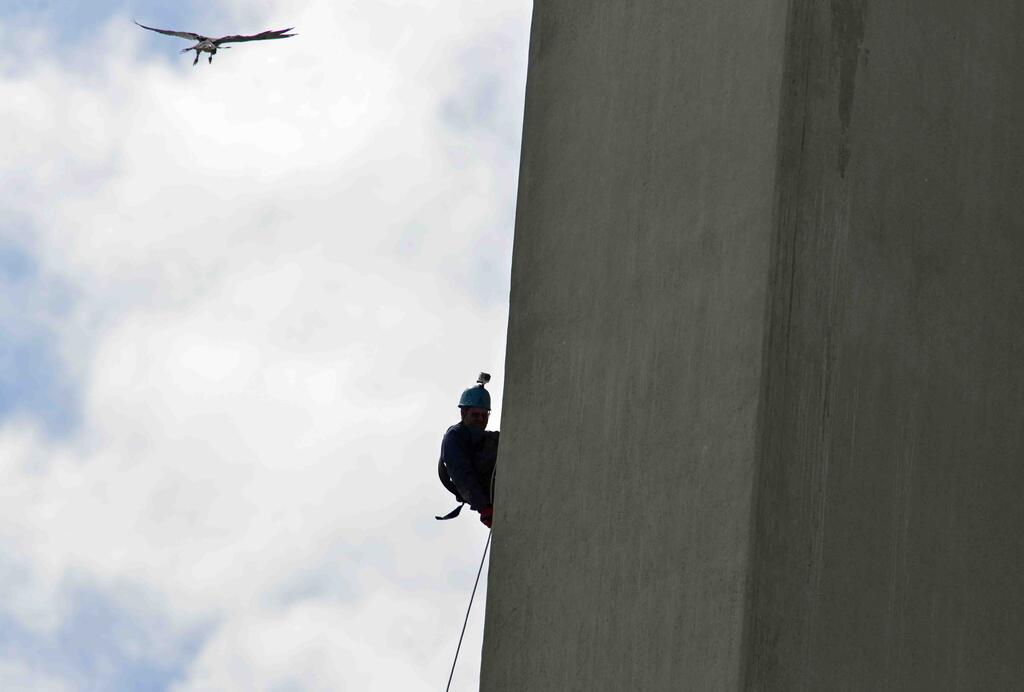
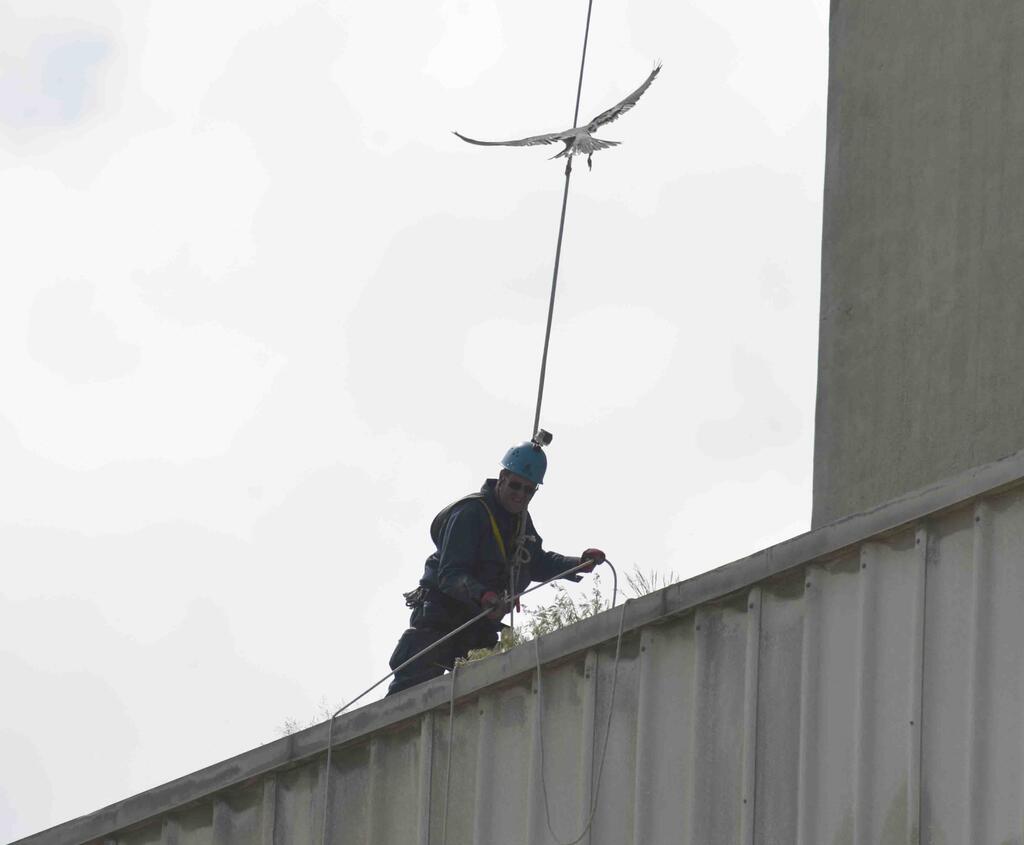
Once again the wonderful foster family at CRH Canada has 4 healthy peregrine chicks added to the family and we are so very thankful for their support and assistance in the 2017 banding of the chicks. and as always for the brave efforts of our climber John Miller who climbed down the silo to extract the chicks.
Here is the information on this years offspring.
Female named Annie band number Z 15 red tape
Male named John band number X 77 Blue tape
Female named Jessica band number Z 17Yellow tape
Female named Clarissa band number Z 20 Green tape
Photos to come soon.
Posted on June 11, 2017 2:35 am
May 01, 2017 - Mississauga - Holcim
Marion Nash Reports:
As of April 19th there were 4 eggs at CRH Cement plant Mississauga.
Sorry for the late post but we have had some difficulty with our web host server.
Posted on May 1, 2017 4:33 pm
May 19, 2016 - Mississauga - Holcim
Marion Nash Reports:
May 24th - 2016
Here are a couple of photos of the recently hatched chicks sent from the CRH Canada Group.
Looking really good!
Posted on May 24, 2016 10:20 pm