June 10, 2023 - Mississauga - Executive Centre
Marion Nash Reports:
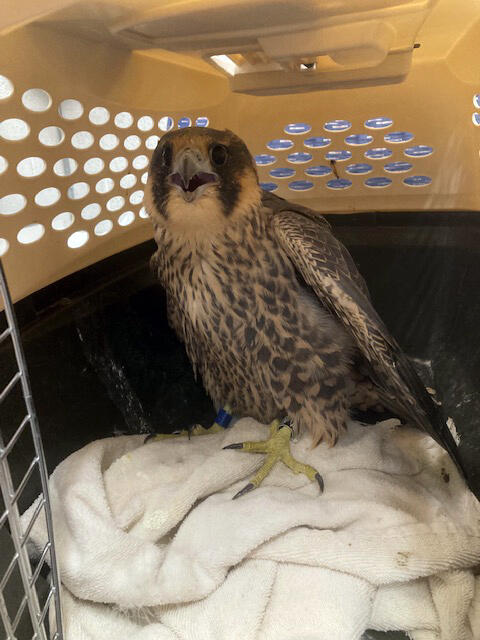
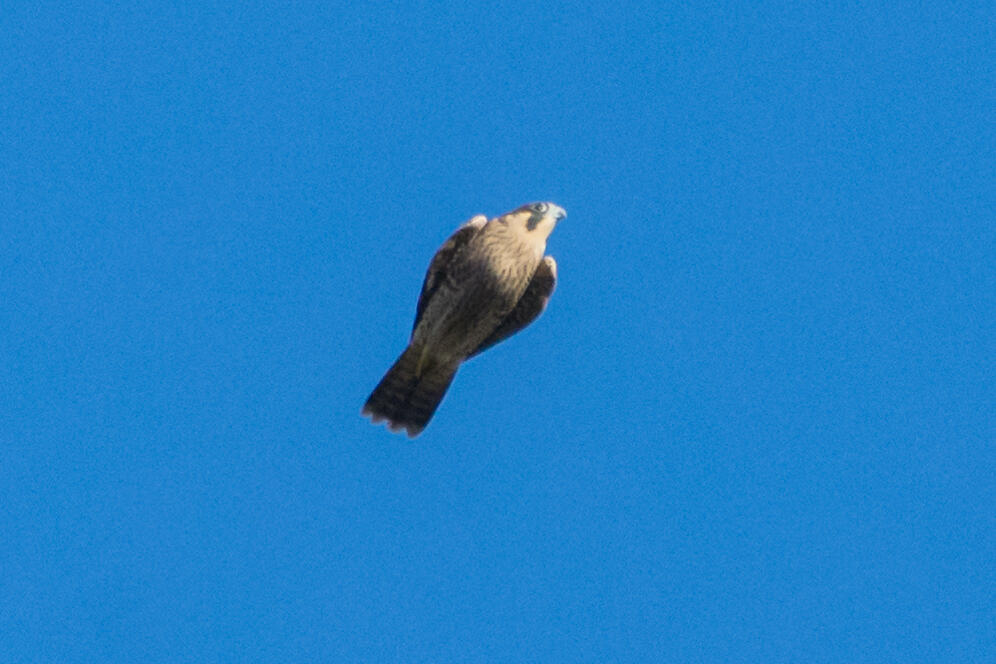
Scuttle took a flight but hit a window too hard and did not survive. So the only survivor at this point is Dragon Heart however, Just after 2:00 PM Dragon Heart flew, tried for the west side if MEC 1, came down around the loading doc then flew over and hung on the Nursery stairs for a minute. She flew past Bruce and came down but he managed to catch her up and if she is ok she will be released tonight by Mark. Hopefully Se stays high and away from windows.Hopefully see photo of her in the carrier. Mark Successfully released her on the roof of the nest building tonight. You sure have to have some seriously thick skin to do this job. Thanks to Bruce and Lucie for being there for these chicks.
Posted on June 10, 2023 10:47 pm
June 06, 2023 - Mississauga - Executive Centre
Cathy Kerr Reports:
UPDATE MEC : From Bruce
It started unexpectedly last Friday as I went out to do a Assessment. Didn’t see much, until one of thr Gardiners found a Juvenile on the Ground. It turned out to be Scuttle(”Yellow”) . She was rescued and released Friday/Saturday morning.
She finally popped up during the Evening Shift.
SAD NEWS: On Monday as I was driving to MEC, I received a Call from MEC Security that a Juvenile had been found deceased @ around 5:30 AM. It turned out to be Rana.
On Tuesday evening just before leaving I checked the Nest Ledge and much to my surprise there were 2 Juveniles on it. Sometime through the day, Scuttle had snuck back to the Nest unseen and joined her sister Dragon Heart.
On Thursday Afternoon Scuttle came down again & was put back on Nest Building.
Thanks Bruce for all your time at MEC and this report.
RIP little Rana
Posted on June 9, 2023 11:26 pm
June 03, 2023 - Mississauga - Executive Centre
Marion Nash Reports:
MEC fledge watch started unofficially yesterday. based on the age of the chicks we started the watch but did not expect any of the chicks to fly yet as they still had so much fluff on them.. Bruce was on site so when security saw one of the fledglings on the ground they contacted him and the chick was rescued. The chick made Bruce do a bit of running to catch her. Bruce called me to let me know she was in the carrier inside MEC1 to hold for later release because not having seen her come down we wanted to make sure she was ok. It turns out it was Scutttle and he believed since she was found at the base of the building she slipped of the edge and fluttered down to the ground so no actual intended flight. Mark went out last night to examine her and found her to be just fine and agreed with so much down still on her she did have a slip off the ledge. She was put back up on the roof so Mom and Dad can find her in the morning. Hopefully Scuttle will hold off on scuttling on the edge until she is a bit older and ready to fly.
Posted on June 3, 2023 10:19 am
May 25, 2023 - Mississauga - Executive Centre
Marion Nash Reports:
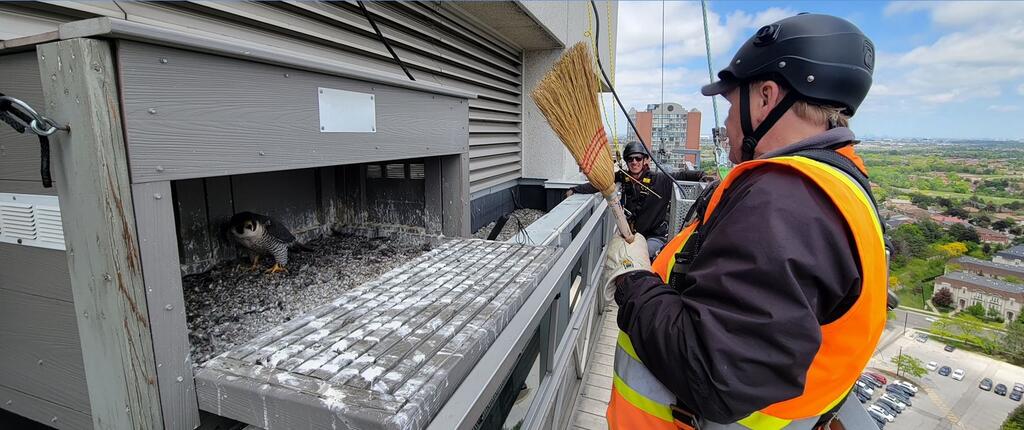
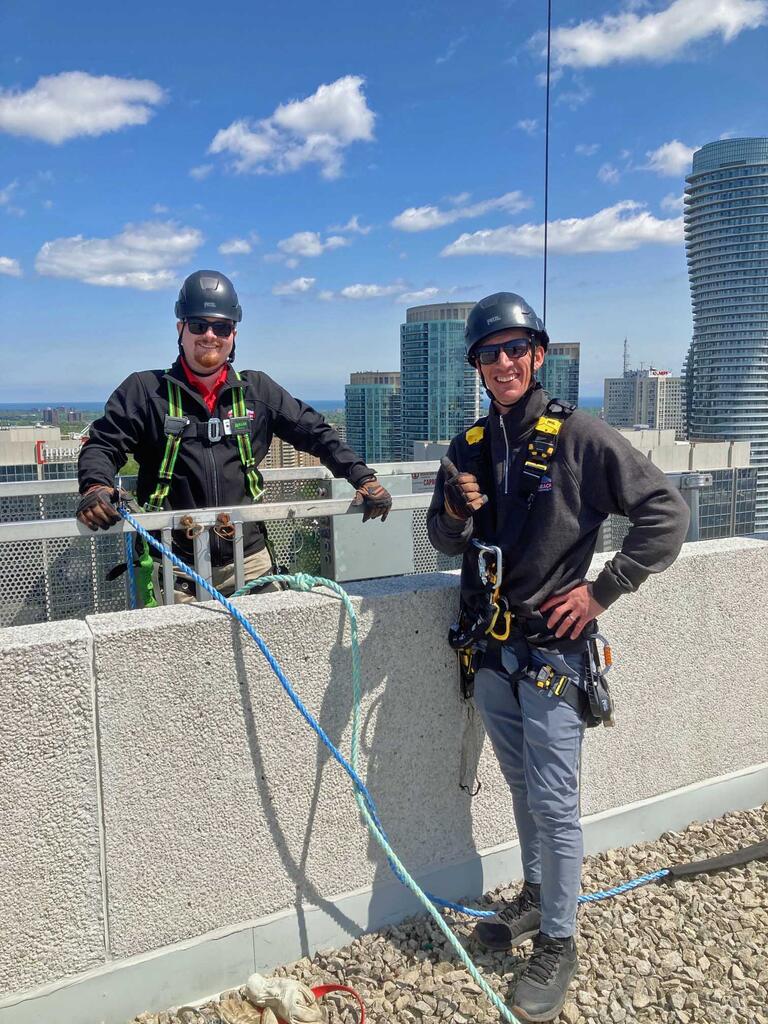
A shot from the swing stage at the Mississauga Executive Centre. Skyreach volunteers Bradley Stanley and Ryan Khone. and Mark Nash CPF Director Great View I loved going up on the swing stage at past bandings! Photos from Bradley.
Marion
Posted on May 25, 2023 8:39 pm
May 25, 2023 - Mississauga - Executive Centre
Marion Nash Reports:
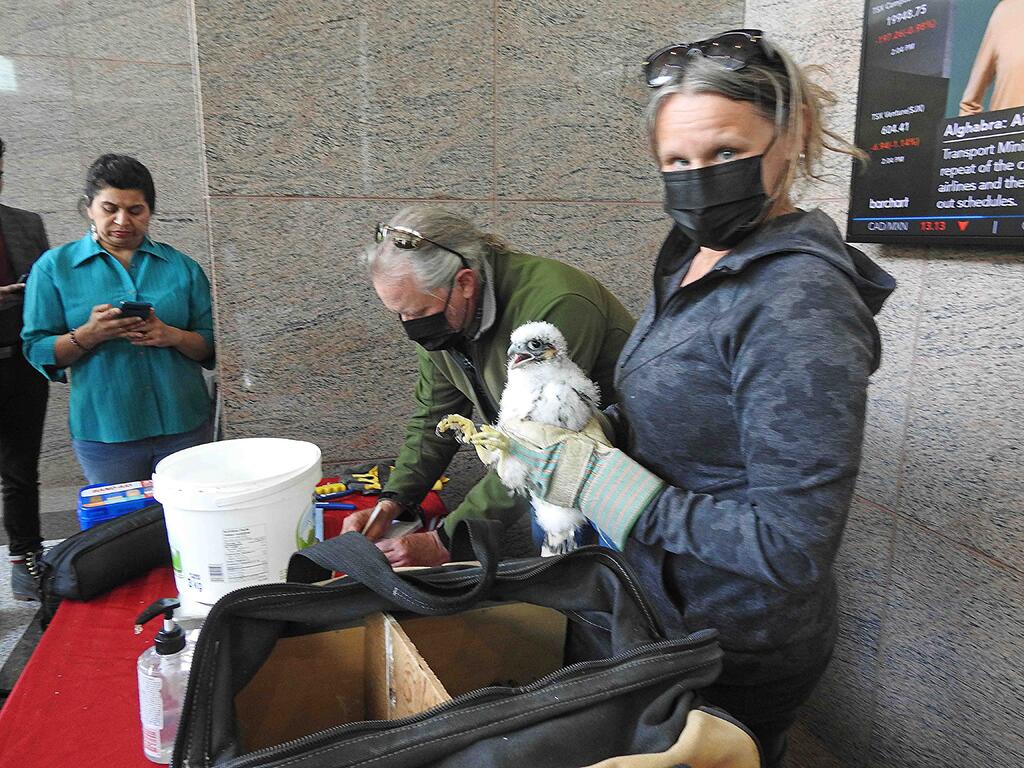
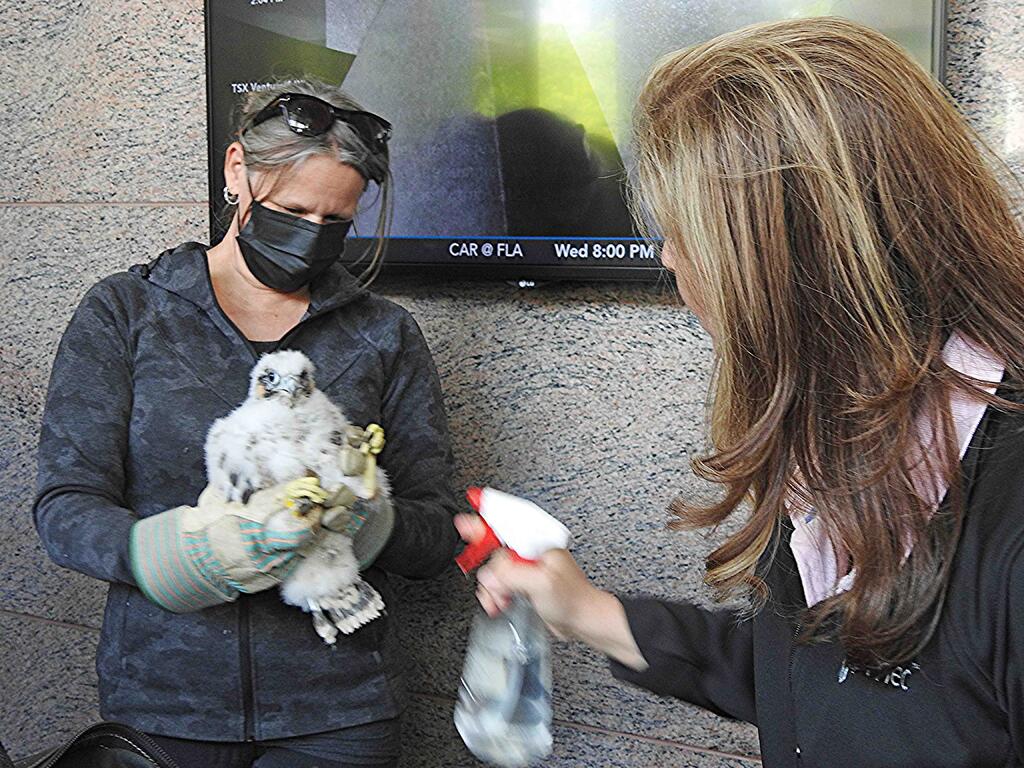
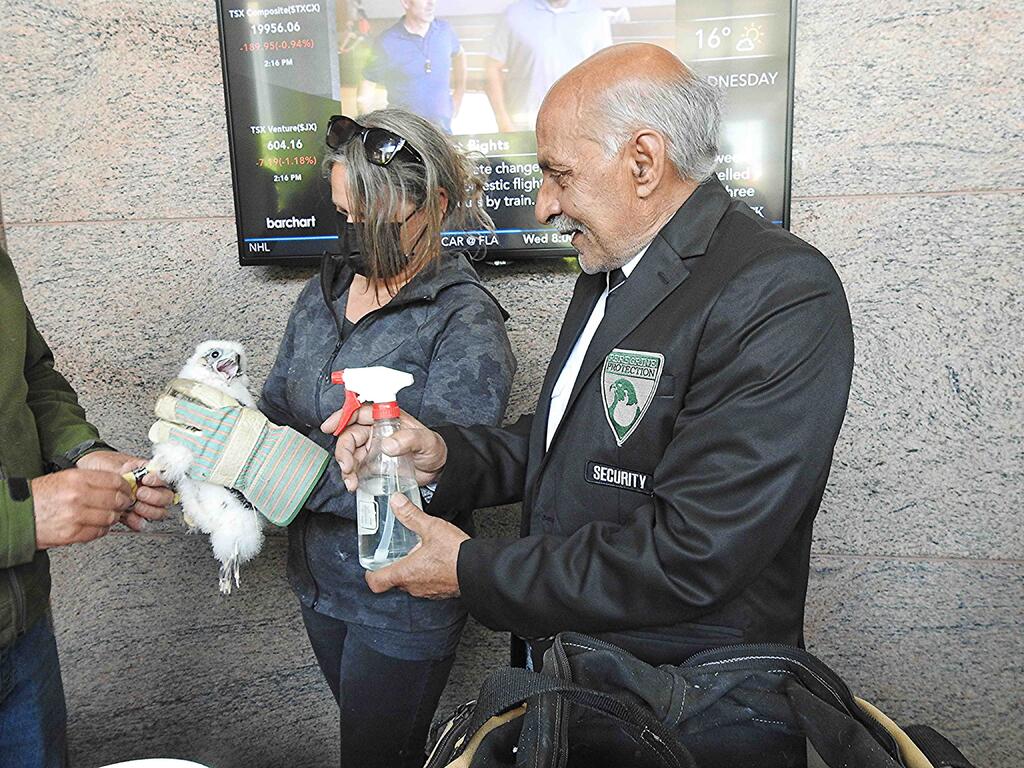
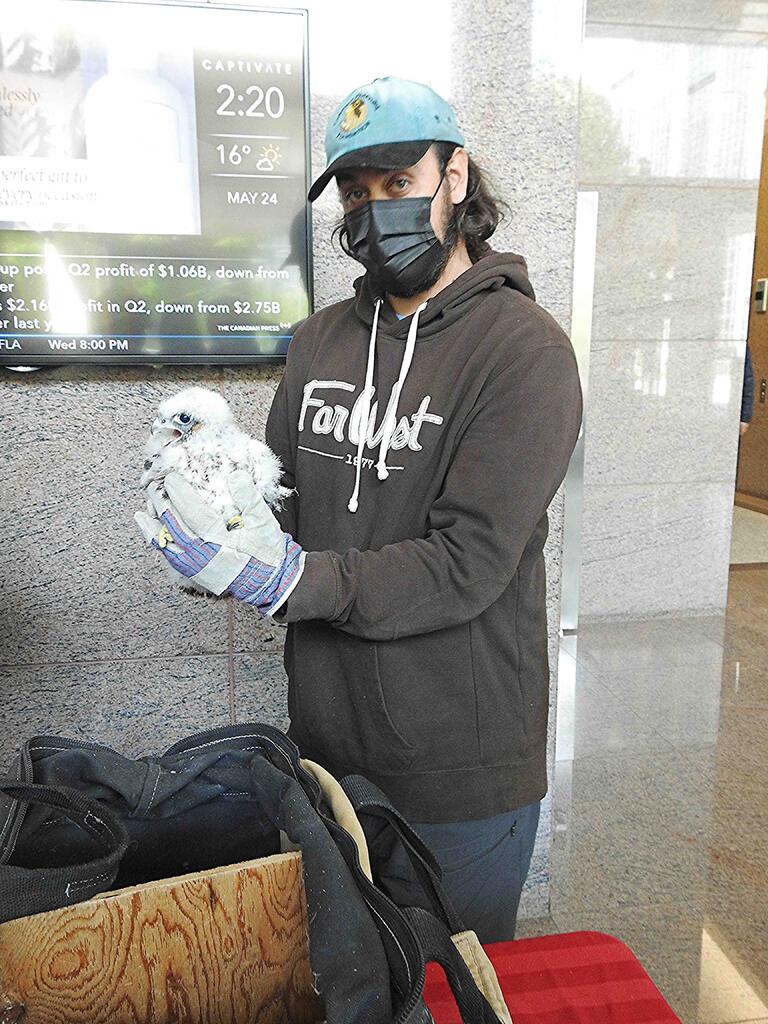
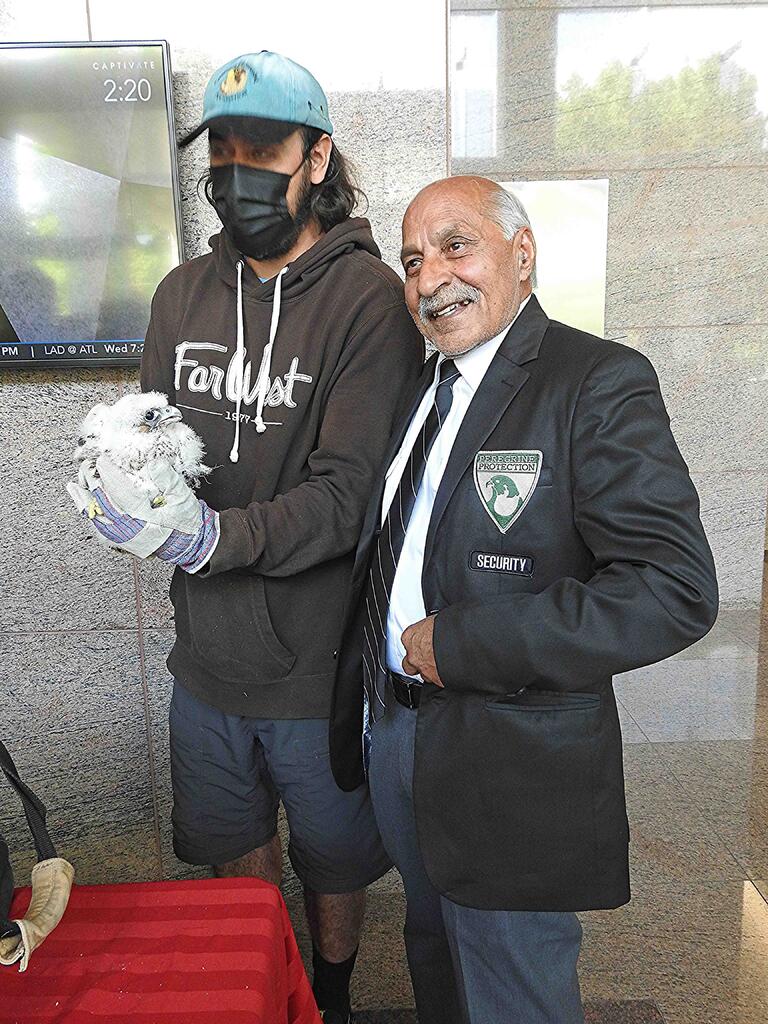
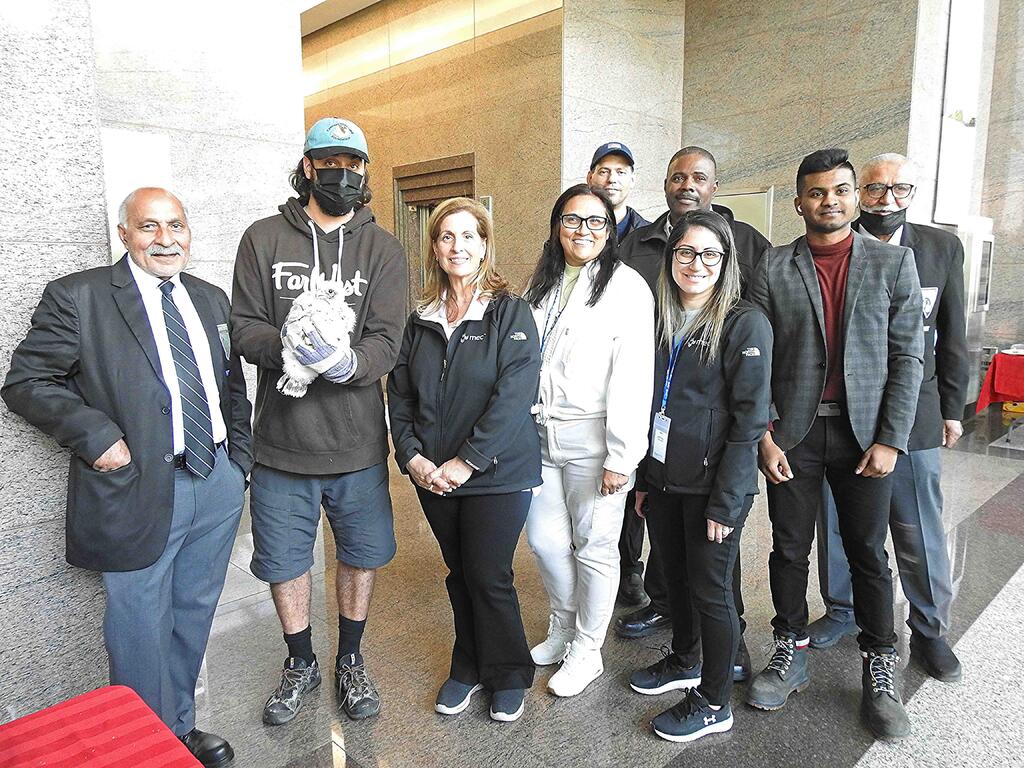
It was a perfect day for banding not too hot or too windy. Sky Reach was there when we arrived and had the swing stage all set up and ready to go. Angie from Colliers Property Management had everything ready in the lobby for us including coffee and cookies for everyone ( nice treat).
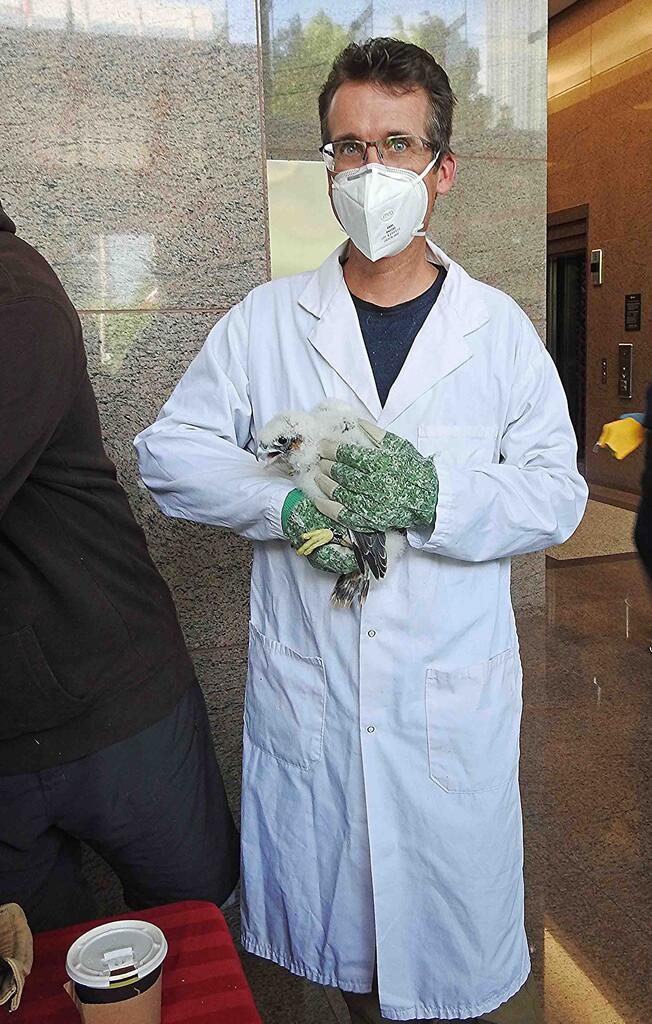
With a ride to the nest by volunteers at Sky Reach on the swing stage Mark Nash Director of The Canadian Peregrine Foundation extracted the chicks from the nest and Eva Bobak from the Ministry of Natural Resources and Forests who volunteers her time on a day off hauled up and received the duffel bag holding 3 chicks and brought them down to the banding table.
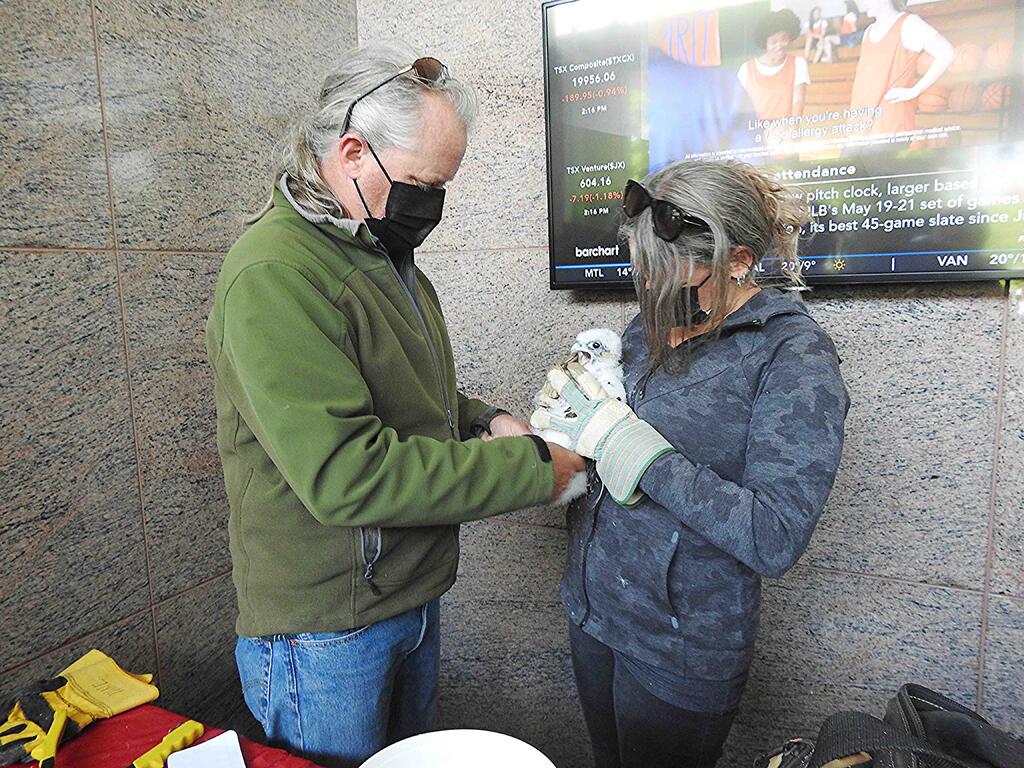
Eva then assisted Mark Heaton a retired Ministry of Natural Resources and Forrest field biologist and CPF volunteer band the chicks, then John Beals our new climber transferred each banded chick to Glenn Barrett from Environment and Climate Change Canada who did blood testing on each chick as part of a 5 year field study on environmental toxins.
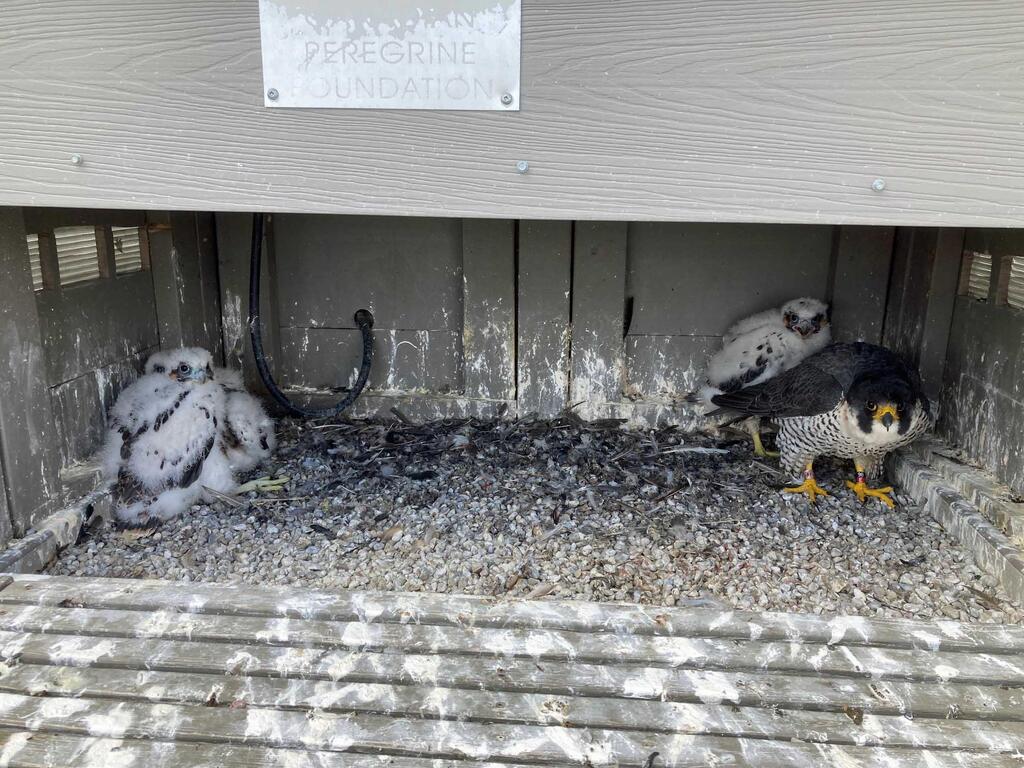
All this was done within an hour and the 3 chicks all females were returned back to the nest and mom safe and sound. Job well done by everyone.
It’s a lot of effort to book and confirm everyone, and make all the arrangements for each banding in Ontario, get all the bandings done safely for both the humans involved and the chicks and none of this could be done without the support of the building management, Sky Reach, and all of our volunteer banders and chick extractors not to mention all those who make donations to the Canadian Peregrine Foundation. A big thank you to all and to those who took time from their busy day to come and see the banding a be part of this annual event.
The chicks were named Rana a star employee of Peregrine Protection MEC security ( yes that is the company name lol) and could not be more fitting since they are often the first to find a downed falcon chick before we even get there in the morning during the fledge watch and call us to rescue the chick. The next name Scuttle was chosen by MEC tenants and the last was named Dragon Heart by me for a fellow fledge watcher.
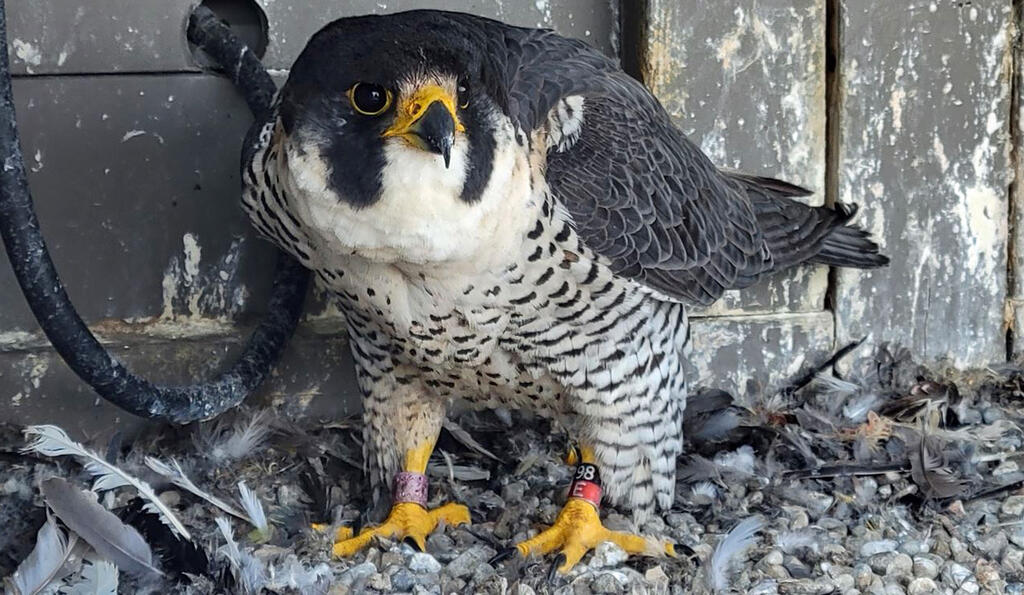
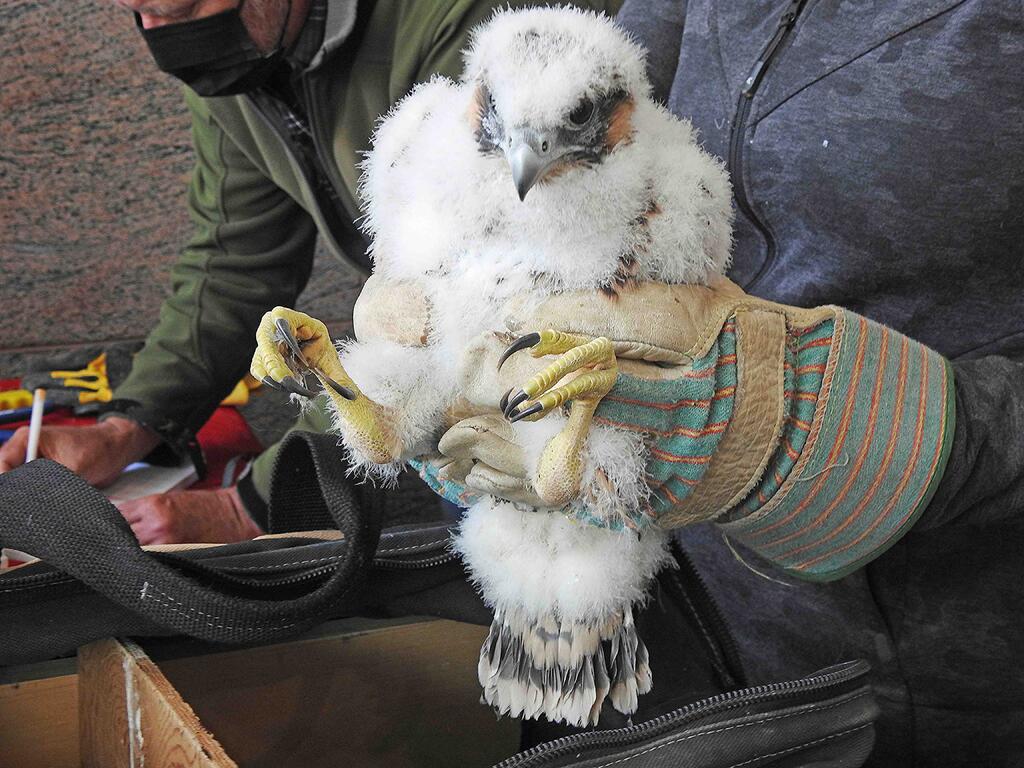
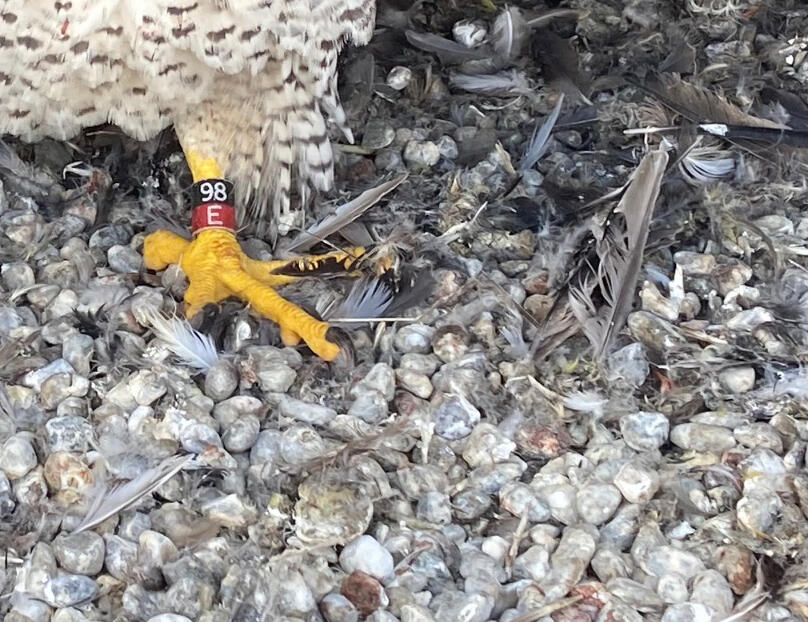
Here is the banding information on the 3 chicks again all females this year. Each chick got 2 bands one on each leg, the alfa neumeric band is Canadian Recovery Band the second silver band is a US fish and wildlife band.
Scuttle 910 grams band number 21over AB with Yellow tape on her silver band
Rana 895 grams band number 22 over AB with Red tape on her silver band
Dragon Heart band number 23 over AB with Blue tape on her silver band.
All chicks were alert and healthy and as usual squawked and complained the hole time, although Dragon Heart was a bit more feisty bighting the gloves of the banders. Guess she was living up to her name.
The Falcon Fledge Watch will begin in about 2 weeks and we will be on site to rescue any chick that may come to ground or get into any trouble until they are all flying well enough to hold their altitude and learn to stay out of trouble whtch can take some time with females.
Her are some photos taken by Mark Nash of the extraction and by me of the banding.
Posted on May 25, 2023 5:21 pm
May 05, 2023 - Mississauga - Executive Centre
Marion Nash Reports:
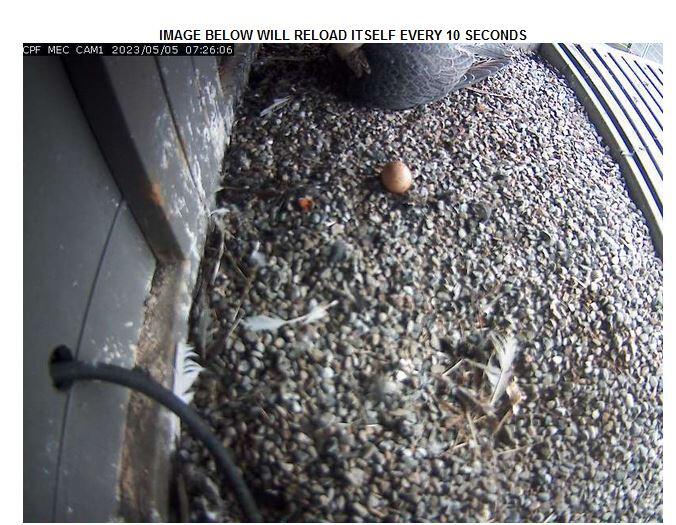
Daniel was able to fix the issue with the web camera and it is back up and running.
Posted on May 5, 2023 8:30 am
May 03, 2023 - Mississauga - Executive Centre
Marion Nash Reports:
Mark got the new monitor hooked up today and got a camera image of mom and 2 chicks although he believes he saw a 3rd head. The chicks are about 3 days old and banding is booked for May 24th at 1 :00 PM. stay tuned for banding information and photos.
Posted on May 3, 2023 4:08 pm
April 24, 2023 - Mississauga - Executive Centre
Marion Nash Reports:
Mark was able to check on the camera today and although the old monitor is fried he was able to hook up a small test monitor and got an image of the female incubating. She did adjust herself but did not get up so he could not see the eggs but does not believe there is a hatch yet. We are going to try to hook up a laptop to the camera and reprogram the camera to link to our website again.
Posted on April 24, 2023 2:26 pm
March 26, 2023 - Mississauga - Executive Centre
Marion Nash Reports:
Because the camera is still down we are watching the old fashion way for now. We hope to have the camera up in a few days.
Bruce was out to the site today and reports seeing the changeover of incubation duties and based on what he had seen the last time he was there eggs may have been laid sometime on the last 7 days.
Hopefully we get the camera images up soon.
Posted on March 30, 2023 12:59 pm
June 27, 2022 - Mississauga - Executive Centre
Marion Nash Reports:
Sorry for the late post have been out of the office. Here is a report from Winston for the Mississauga MEC Nest site.
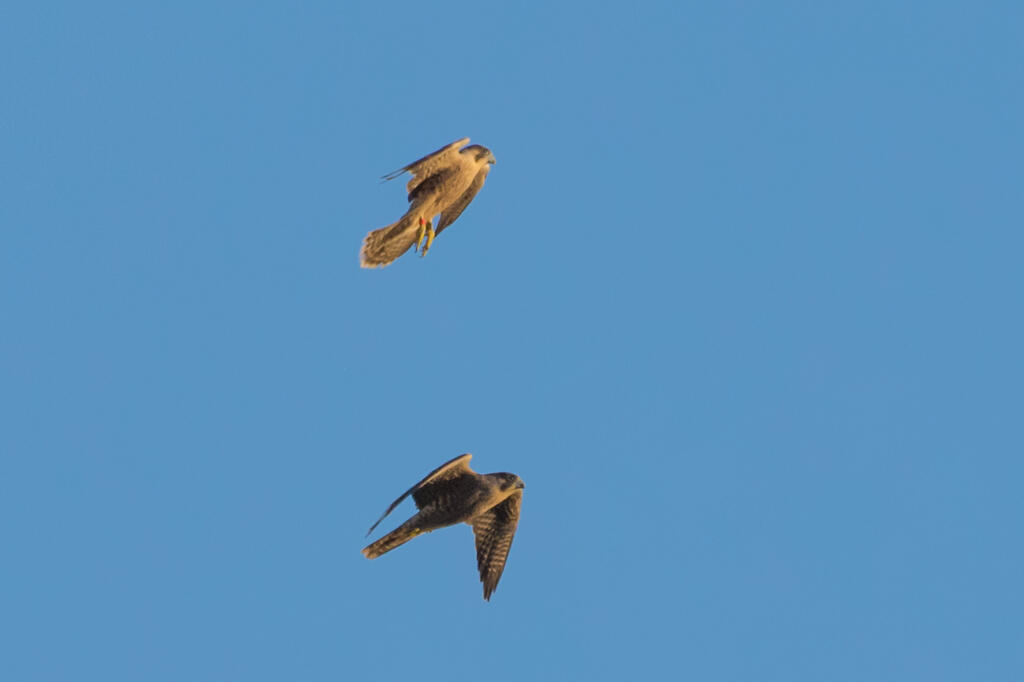
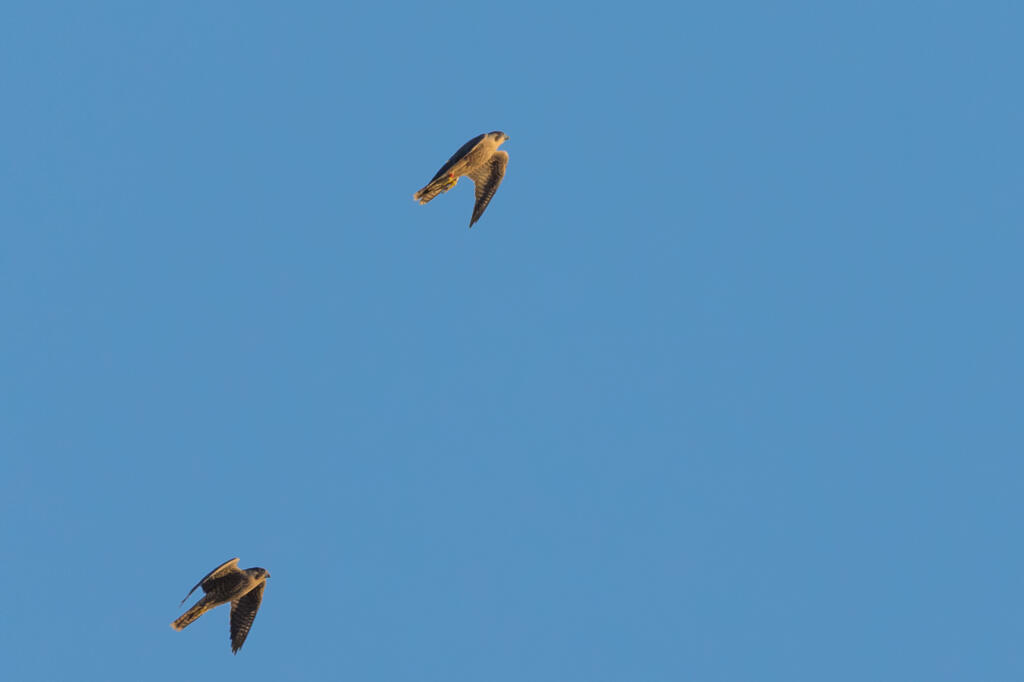
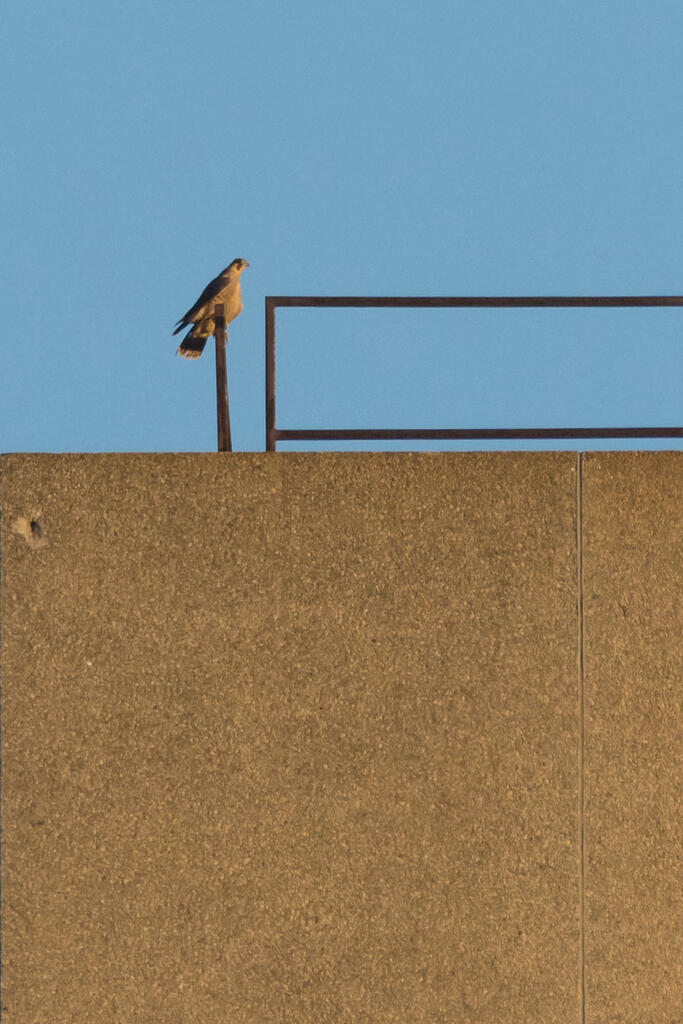
Whatever concerns I had with Red are over. Last night I saw him make a good long flight with his brother. They chased one another and Red even stooped Blue. Considering how advanced Blue is, if Red can keep up, he’s fine. Add to that his successful and controlled landings, there is no danger that we can help him avoid now. Both boys are good to go. I would be a little concerned about one getting hit by a car. Yesterday they were diving at birds near the go cart track. I witnessed how low one came and although not low enough to get hit by a double-decker bus, it was an aborted dive.
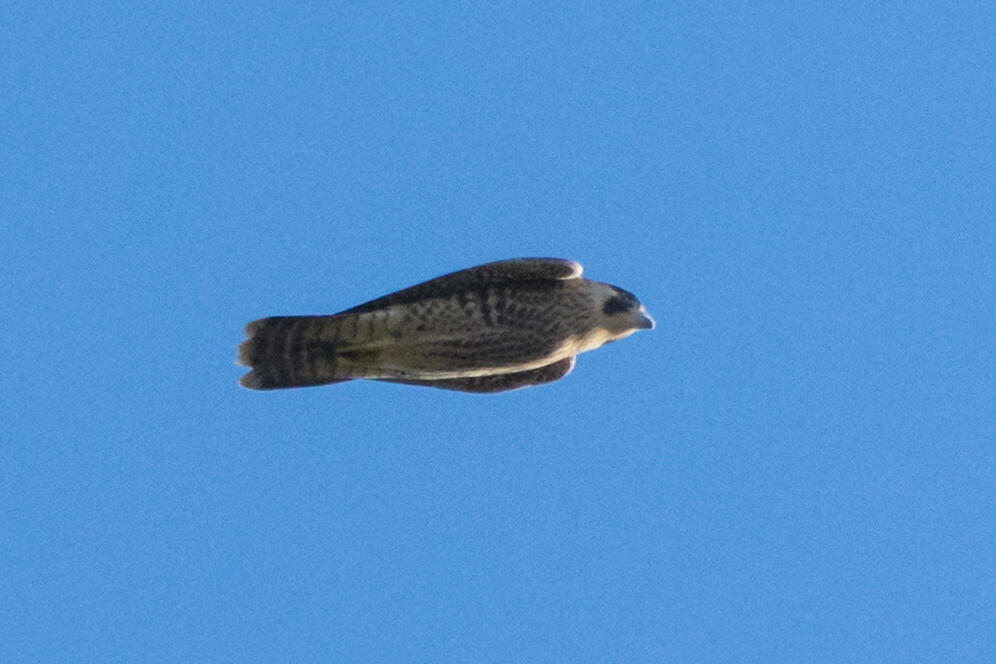
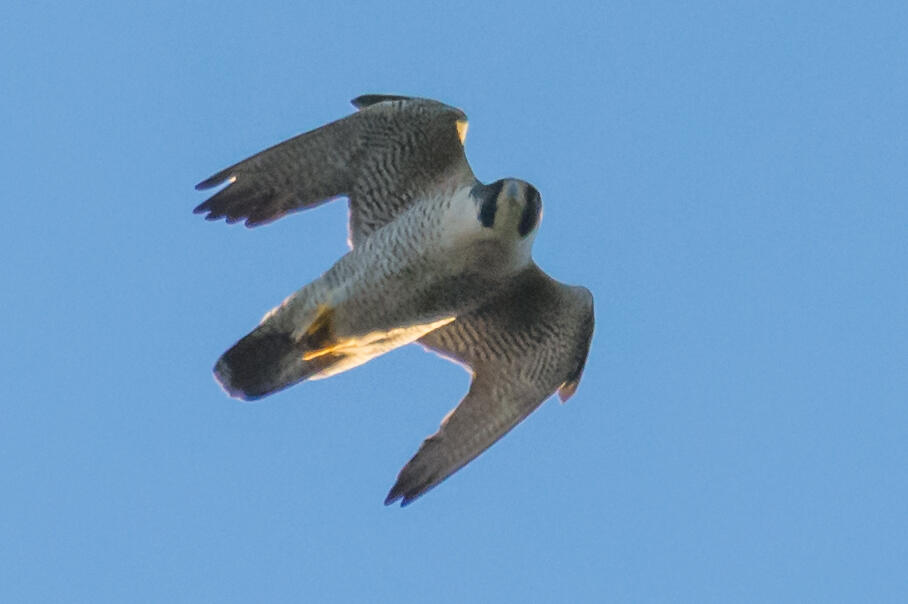
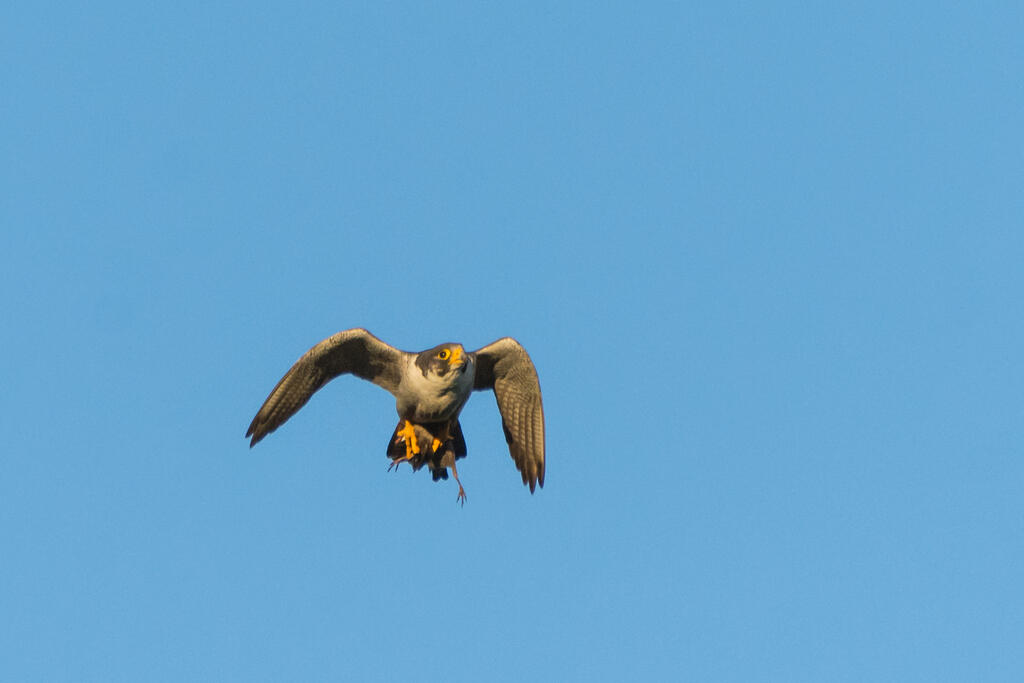
Here are some pictures. The one on the Morguard railing looks like a potbelly giant peregrine but it is both boys together.
Mark, you like Alula pictures so I have a bad one attached of who I believe is Midnight. Renegade is the one with food.
Blue is the one with his wings tucked in, ready to be mummified by an ancient Egyptian.
Posted on June 27, 2022 9:30 am